
What's Happening?
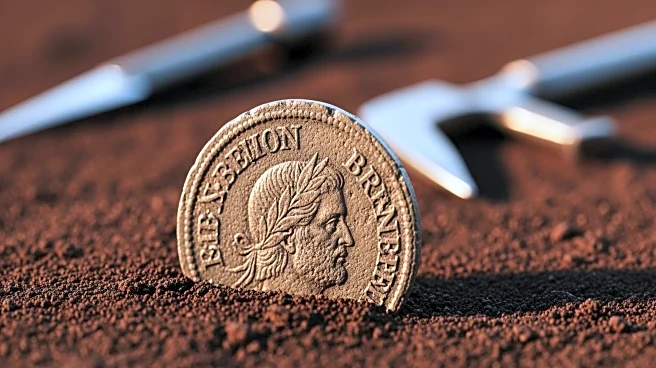
An archaeological excavation in a French village has uncovered a jug containing 40,000 Roman coins, believed to be buried between A.D. 280 and 310. The discovery was made by experts analyzing the coins, which
provide a glimpse into the economic history of the Roman Empire. The coins were found in a jug, suggesting they were intentionally buried, possibly as a form of savings or protection during a period of instability. This find adds to the understanding of Roman economic practices and the historical context of the era.
Why It's Important?
The discovery of such a large number of Roman coins is significant for historians and archaeologists as it offers insights into the economic conditions and practices of the Roman Empire during the late third and early fourth centuries. It highlights the use of coinage as a means of wealth storage and the potential for economic instability during that period. This find can contribute to the broader understanding of Roman history and the factors that influenced its economic systems. Additionally, it underscores the importance of archaeological work in uncovering historical artifacts that can reshape historical narratives.