


What's Happening?
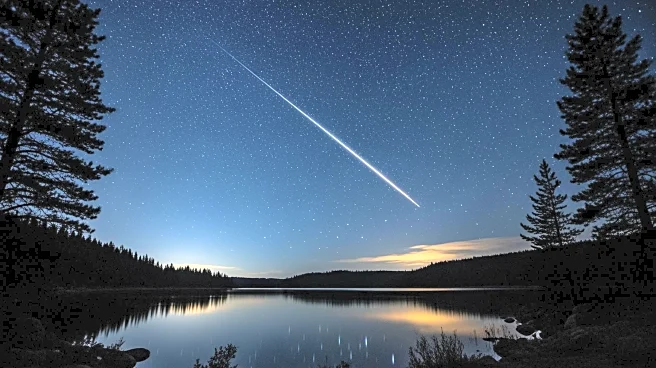
The Perseids meteor shower, one of the most anticipated astronomical events of the year, is set to peak on August 12-13, 2025. According to NASA, the best viewing times are early in the morning before dawn in the Northern Hemisphere. The meteor shower occurs
when Earth passes through debris left by comet 109P/Swift-Tuttle, which last visited the inner solar system in 1992. During the peak, viewers can expect to see about 50 to 100 meteors per hour. The meteors appear to radiate from the constellation Perseus, although they do not actually originate from there. The event is known for its fireballs, which are larger explosions of light and color that can persist longer than an average meteor streak.
Why It's Important?
The Perseids meteor shower is significant not only for its visual spectacle but also for its contribution to public interest in astronomy and space science. Events like these provide an opportunity for educational outreach and inspire curiosity about the universe. The shower's occurrence during warm summer nights makes it accessible to a wide audience, potentially increasing public engagement with scientific topics. Additionally, the Perseids offer a chance for amateur astronomers and enthusiasts to participate in observational activities, fostering a community of interest around space exploration and celestial phenomena.
What's Next?
As the peak of the Perseids approaches, sky watchers are advised to find locations with minimal light pollution to maximize visibility. The moon will be 84% full during the peak, which may impact the visibility of the meteors. Observers are encouraged to allow their eyes to adjust to the darkness for optimal viewing. The event will continue until at least August 23, providing multiple opportunities for observation. Organizations like NASA and the American Meteor Society may offer additional guidance and resources for those interested in learning more about the meteor shower.