







What's Happening?
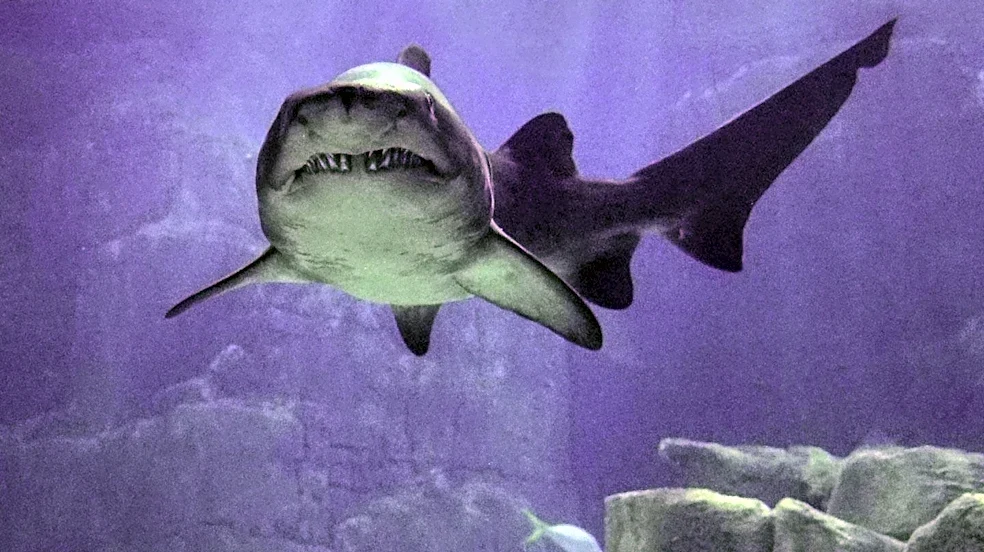
Dozens of endangered sand tiger sharks are being collected from protected U.S. waters, primarily Delaware Bay, and exported to aquariums globally, according to an investigation by The Guardian. Between 2018 and 2024, 80 sand tiger sharks (Carcharias taurus)
were removed, with the majority destined for aquariums in countries such as China, the United Arab Emirates, South Korea, and Thailand. These sharks are classified as Critically Endangered globally by the IUCN, yet U.S. regulations permit their collection for public display under special permits, despite protection from commercial and recreational fishing in U.S. waters. Research from institutions including the University of Delaware, Delaware State University, and the University of Rhode Island indicates a significant increase in these removals in recent years. Scientists are particularly worried because sand tiger sharks have a very slow reproductive rate, typically producing only one or two pups every two to three years. Many of the collected sharks are large juveniles or nearing reproductive maturity, which could severely impact the species' recovery.
Why It's Important?
The removal of endangered sand tiger sharks from U.S. protected waters for overseas aquariums has significant implications for marine conservation and the effectiveness of protective regulations. While U.S. authorities assert that collection permits are individually assessed with quotas, the lack of a formal population assessment for sand tiger sharks in the north-west Atlantic makes it difficult to determine the sustainability of these removals. This practice raises questions about the balance between marine education and conservation efforts versus the direct impact of removing endangered species from their natural habitats. The slow reproductive cycle of sand tiger sharks means that the removal of even a small number of mature or near-mature individuals can have a disproportionately large and long-lasting negative effect on the wild population's ability to recover. This situation could undermine years of conservation efforts and potentially set a precedent for other endangered species, highlighting a loophole in current protection measures that allows for commercial exploitation under the guise of public display.
What's Next?
Researchers are advocating for increased transparency and improved monitoring of sand tiger sharks after their export to international aquariums. This call for better oversight suggests that current tracking mechanisms may be insufficient to ensure the welfare and long-term impact of these removals. There may be a push for a formal population assessment of sand tiger sharks in the north-west Atlantic to establish clear baselines and determine sustainable removal limits, if any. Conservation groups and marine scientists are likely to continue to scrutinize the permitting process and potentially lobby for stricter regulations or a re-evaluation of the criteria for collecting endangered species for public display. The debate will likely intensify regarding whether the educational benefits of displaying these sharks in aquariums outweigh the ecological risks of removing them from their critical natural habitats, especially given their endangered status and slow reproductive rates.
Beyond the Headlines
This issue delves into the ethical complexities of wildlife conservation and the role of public aquariums. While aquariums often claim to contribute to marine education and conservation, the practice of removing endangered species from the wild for display presents a paradox. It raises fundamental questions about whether it is justifiable to remove protected animals from their natural environment, where they contribute to the ecosystem, to place them in captivity, even with the best intentions for education. The situation also highlights potential inconsistencies in international conservation efforts, where a species protected in one region can be legally exploited for display elsewhere. This could lead to a broader re-evaluation of international agreements and domestic policies concerning the trade and display of endangered marine life, potentially influencing how permits are issued and how the long-term impacts on wild populations are assessed. The case of the sand tiger sharks could become a focal point for discussions on the future of ex-situ conservation and its ethical boundaries.