





What's Happening?
The H5N1 avian flu, also known as highly pathogenic avian influenza (HPAI), has re-emerged in Minnesota earlier than anticipated this fall. According to Shauna Voss, Assistant Director of the Minnesota Board of Animal Health, the disease was confirmed
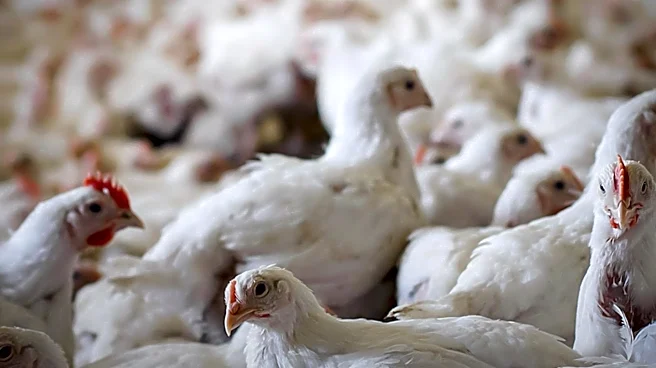
in a Wright County commercial flock of 29,800 birds on September 1. Since then, seven commercial flocks and three backyard flocks have tested positive, leading to the culling of over 260,000 birds. This early surge is unusual, as the disease typically appears in October. Minnesota farmers have been contending with HPAI annually since the USDA detected the ongoing outbreak in 2022. The virus is primarily spread by migratory birds traveling south from Canada, which make stops in Minnesota and interact with local poultry. HPAI is a deadly strain for poultry, capable of annihilating entire flocks within days.
Why It's Important?
The early return of H5N1 avian flu to Minnesota carries significant implications for the U.S. poultry industry and the state's economy. Minnesota is a leading producer of turkeys, raising approximately 45 million birds annually. The culling of over 260,000 birds due to the current outbreak represents a substantial economic loss for affected farmers and could lead to disruptions in the supply chain. The recurring nature of these outbreaks, now appearing earlier in the season, suggests a persistent threat that requires ongoing resource allocation for monitoring, response, and prevention. The challenge of developing a vaccine is compounded by international trade agreements, as many countries do not accept vaccinated birds, limiting a key preventative measure. This situation places a continuous burden on the Minnesota Board of Animal Health and its response teams, highlighting the long-term struggle against this unpredictable virus.
What's Next?
Minnesota officials anticipate continued spring and fall outbreaks of HPAI for the foreseeable future, as the virus remains prevalent in the wild bird population. The Minnesota Board of Animal Health will maintain its vigilance, with response efforts focusing on culling infected flocks, thorough disinfection of affected sites, and a waiting period before restocking. The unpredictability of influenza viruses means that the timing and severity of future outbreaks are uncertain. The state will continue to monitor migratory bird patterns and their interactions with domestic poultry. The ongoing challenge of vaccine development and its acceptance in international trade will likely keep culling and biosecurity measures as primary strategies. The long-term hope is for the virus to naturally dissipate from the wild bird population, but until then, Minnesota's poultry industry and animal health authorities face a sustained battle.
Beyond the Headlines
The persistent H5N1 avian flu outbreaks in Minnesota underscore broader issues concerning agricultural biosecurity, global trade, and ecological health. The reluctance of some countries to import vaccinated poultry creates a significant barrier to widespread vaccination efforts, forcing reliance on reactive measures like culling. This highlights a complex interplay between public health concerns, economic interests, and international policy. Furthermore, the continuous presence of HPAI in wild bird populations points to the intricate connection between wildlife and domestic animal health, suggesting that environmental factors play a crucial role in disease transmission. The emotional and financial toll on farmers, who face repeated losses and disruptions, often goes beyond immediate economic figures. This situation also raises questions about the sustainability of current poultry farming practices in regions that are critical migratory bird flyways, prompting a need for innovative solutions that balance agricultural productivity with disease prevention and ecological considerations.