



What's Happening?
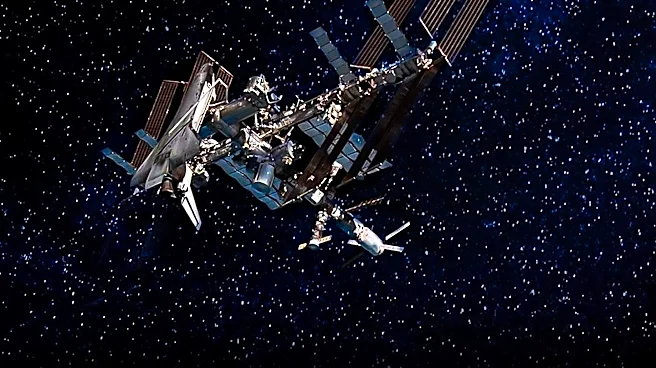
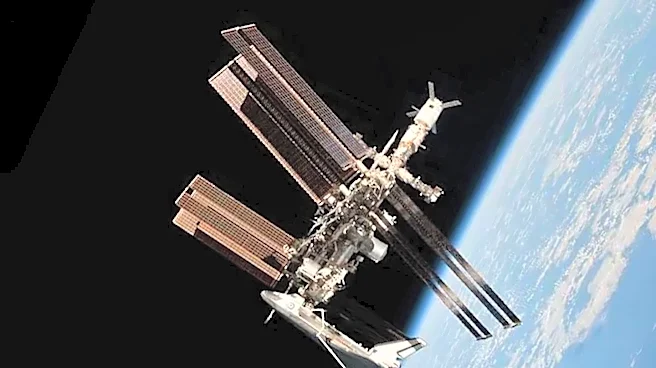
On October 29, 2026, Canadian Space Agency (CSA) astronaut Joshua Kutryk and NASA astronaut Anil Menon conducted a spacewalk outside the International Space Station (ISS). During this spacewalk, they successfully installed a new roll-out solar array.
The ISS was orbiting 267 miles above the South Atlantic Ocean at the time. In addition to the installation, the astronauts performed preparatory work for their subsequent spacewalk, scheduled for November 5, 2026. The upcoming spacewalk will involve the installation of the eighth and final roll-out solar array, which is expected to increase the station's available power by up to 30%.
Why It's Important?
The installation of new solar arrays is crucial for the continued operation and expansion of the International Space Station. The 30% increase in available power will significantly enhance the station's capabilities, allowing for more scientific experiments, advanced technological demonstrations, and potentially supporting a larger crew or more power-intensive equipment. This upgrade is vital for maintaining the ISS as a leading platform for international space research and collaboration. For the U.S., this ensures continued access to a unique microgravity laboratory, fostering scientific discovery and technological innovation that can have terrestrial applications, from materials science to medicine.
What's Next?
The next immediate step is the scheduled spacewalk on November 5, 2026, where astronauts Kutryk and Menon will install the eighth and final roll-out solar array. Following the completion of this installation, the focus will shift to integrating the new power capabilities into the ISS's systems and utilizing the increased power for ongoing and future research missions. This power boost will enable more ambitious scientific endeavors and potentially extend the operational lifespan of the station. The success of these spacewalks also informs future designs for power systems on upcoming missions to the Moon and Mars.
Beyond the Headlines
Beyond the immediate operational benefits, the successful installation of these advanced solar arrays represents a significant milestone in space infrastructure development. It demonstrates the ongoing commitment of international partners to the ISS and highlights the critical role of human ingenuity and collaboration in maintaining complex orbital assets. The technology developed for these high-efficiency solar arrays could also find applications in terrestrial renewable energy solutions, contributing to sustainable energy efforts on Earth. Furthermore, the experience gained from these complex spacewalks enhances astronaut training and mission planning for future deep-space exploration, where self-sufficiency and robust power systems will be paramount.