



What's Happening?
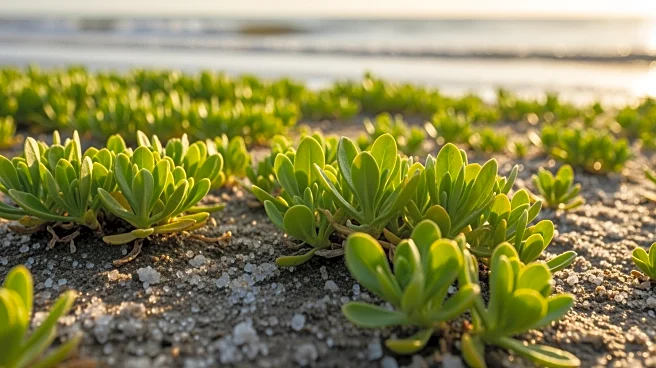
Halophytes, salt-loving plants, are being explored as a sustainable solution to boost coastal agriculture in areas affected by rising sea levels and increased soil salinity. These plants thrive in high-salinity environments, such as coastlines and salt marshes,
and are being considered for bi-cropping and rotation with traditional crops like tomatoes. Researchers have found that halophytes can improve yield and nutritional value while mitigating the impact of fertilizer runoff. The initiative aims to adapt agricultural practices to changing environmental conditions, with efforts to stimulate commercial demand for halophytes through collaborations with chefs and artists.
Why It's Important?
As climate change leads to rising sea levels and increased soil salinity, traditional agriculture faces significant challenges, particularly in coastal regions. Halophytes offer a promising alternative, providing resilience and adaptability to harsh conditions. By integrating these plants into agricultural systems, farmers can maintain productivity and reduce environmental impact. The approach highlights the need for innovative solutions to address climate-related challenges, emphasizing the role of sustainable practices in ensuring food security and environmental conservation.