
What's Happening?
Iran has presented a 14-point plan demanding the U.S. lift its blockade and sanctions, withdraw forces from the Middle East, and end hostilities, including Israel's conflict in Lebanon, to reopen the Strait
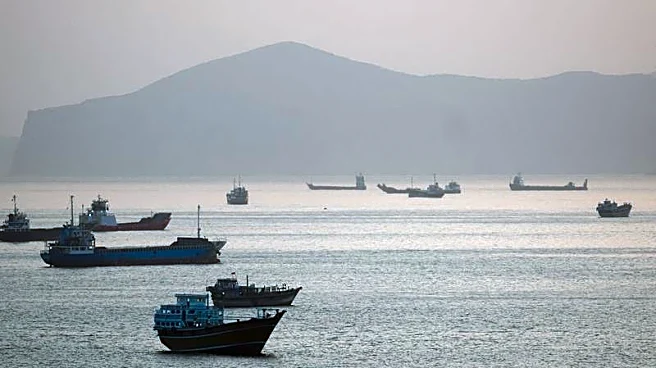
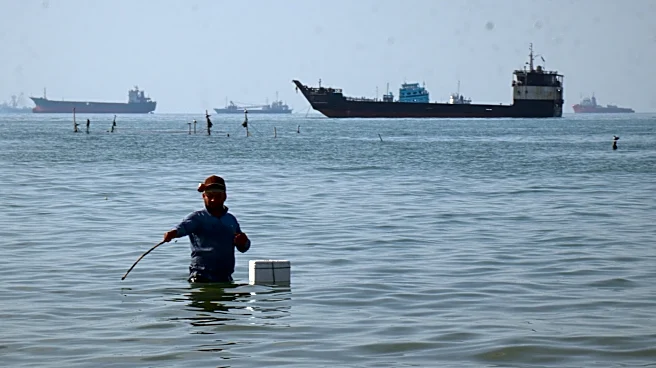
of Hormuz. Iran has set a 30-day deadline for President Trump to agree to these terms. The proposal, which omits any mention of Iran's nuclear program, comes amid heightened tensions following an attack on a cargo ship near the strait. The U.S. has maintained a naval blockade, turning back 49 ships, while Iran insists on controlling the strait, a critical oil route.
Why It's Important?
The Strait of Hormuz is a strategic chokepoint for global oil transportation, and its closure could significantly impact global oil prices and supply. Iran's demands and the deadline set for President Trump highlight the escalating tensions between the two nations, with potential implications for regional stability. The situation underscores the complex geopolitical dynamics in the Middle East, involving U.S. interests, Iranian influence, and the broader international community. The outcome of this standoff could affect global energy markets and diplomatic relations.
What's Next?
The U.S. and Iran are likely to engage in diplomatic negotiations, possibly through intermediaries, to address the demands and avoid further escalation. The international community, including major oil-importing nations, may exert pressure on both parties to reach a resolution. The situation could lead to increased military presence in the region as a precautionary measure. The outcome of these negotiations will be closely watched by global markets and could influence future U.S. foreign policy in the Middle East.