
What's Happening?
The Virginia Tech Helmet Lab, led by Steve Rowson, is at the forefront of helmet safety testing in the United States. Initially focused on football helmets, the lab has expanded its research to include
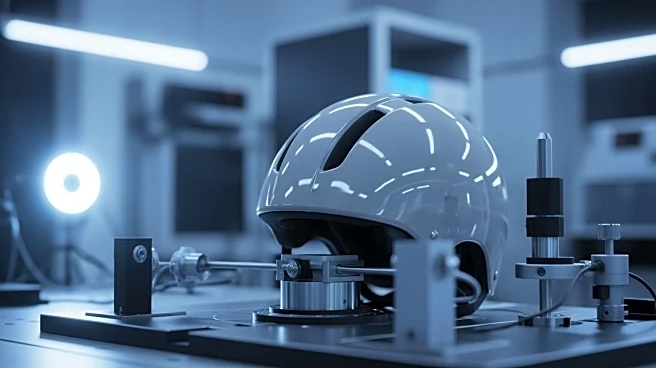
helmets used in hockey, equestrian sports, snow sports, lacrosse, cycling, and even construction. The lab employs advanced technology to test helmets by using sensors inside helmet-clad headforms to measure linear and rotational motion during impact tests. These tests help determine the level of protection helmets provide against head injuries. The lab's findings are made publicly available, offering a detailed rating system that goes beyond the standard pass-fail safety certifications in the U.S. This initiative aims to inform consumers about the safety levels of different helmets, encouraging manufacturers to prioritize safety in their designs.
Why It's Important?
The work of the Virginia Tech Helmet Lab is crucial in enhancing safety standards across various sports and industries. By providing detailed safety ratings, the lab empowers consumers, including athletes, coaches, and parents, to make informed decisions about head protection. This is particularly significant in light of increasing concerns about concussions and chronic traumatic encephalopathy (CTE) in sports like football. The lab's research not only influences consumer choices but also drives manufacturers to improve helmet safety features, potentially reducing the risk of head injuries. As industries become more engaged with the lab's findings, the emphasis on safety could lead to widespread improvements in helmet design and manufacturing standards.
What's Next?
The Virginia Tech Helmet Lab continues to expand its research scope, with ongoing projects such as rating youth bike helmets. This involves studying how children experience head impacts differently from adults, which will inform the development of helmets better suited to protect young riders. The lab's collaboration with various industries suggests a growing interest in helmet safety, which could lead to further innovations and improvements in protective gear. As the conversation around head injuries in sports continues, the lab's work will likely play a pivotal role in shaping future safety regulations and standards.