





What's Happening?
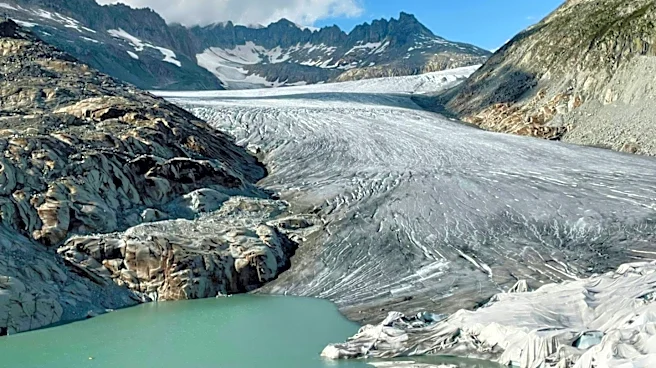
Scientists in Switzerland have successfully tested sheep's wool as a biodegradable alternative to synthetic plastic covers for protecting glaciers from melting. The 'Keep It Wool' trial on the Tsanfleuron Glacier involved covering 200 square meters of
high-altitude Alpine ice with prototype wool blankets. Measurements taken every two weeks throughout the summer demonstrated that the wool blankets reduced ice loss by approximately the same amount as conventional synthetic covers, which typically cut local melting by 50 to 70 percent. This joint project, initiated by four master's students and developed with the Summit Foundation, the University of Lausanne, and the Swiss Glacier Monitoring Network (Glamos), aims to find a natural, sustainable solution to glacier protection. The wool panels were manufactured by Swiss textile company Fisolan, and early results indicate the natural fiber's surprising stability against harsh weather conditions.
Why It's Important?
The successful trial of sheep's wool as a glacier cover offers a significant step towards more environmentally friendly climate adaptation strategies. Conventional synthetic covers, while effective, are made from plastics like polyethylene or PVC. These materials degrade over time due to UV light and wind, potentially releasing microplastic fibers into meltwater, streams, and surrounding soils. The use of sheep's wool, an agricultural byproduct often discarded or burned due to low commercial demand, provides a fully biodegradable alternative that could prevent microplastic pollution in sensitive Alpine ecosystems. This innovation highlights a potential pathway for repurposing agricultural waste into valuable tools for environmental protection, demonstrating how local resources can be leveraged for climate adaptation efforts. While the method is currently limited to small, high-value areas like ski resorts, it sets a precedent for sustainable material use in environmental conservation.
What's Next?
Despite the promising results, project organizers and glaciologists emphasize that physical covers, whether wool or synthetic, can only protect very small areas of glaciers. Currently, only about 0.02 percent of Switzerland's total glacier surface is covered with protective materials. This means that while the wool covers are effective for localized protection, they are not a comprehensive solution to global warming. The focus will likely remain on using these covers for specific, vulnerable infrastructure or ski areas. Researchers will continue to monitor the long-term efficacy and durability of the wool blankets. The broader implication is a continued search for scalable, sustainable solutions to climate change, with a strong emphasis on reducing global greenhouse gas emissions as the primary long-term strategy for slowing glacier loss.
Beyond the Headlines
This experiment delves into the ethical and practical dimensions of climate change mitigation. The reliance on synthetic materials for glacier protection has raised concerns about microplastic contamination, creating a dilemma where efforts to protect one aspect of the environment inadvertently harm another. The 'Keep It Wool' project addresses this by seeking a solution that is both effective and ecologically sound, transforming a waste product into a valuable resource. This approach underscores a shift towards circular economy principles in environmental conservation, where waste is minimized and resources are reused. It also highlights the critical role of interdisciplinary collaboration, bringing together students, environmental organizations, universities, and textile companies to tackle complex environmental challenges. The project serves as a micro-example of how localized, innovative solutions can contribute to broader environmental goals, even as the overarching challenge of global emissions remains paramount.