
What's Happening?
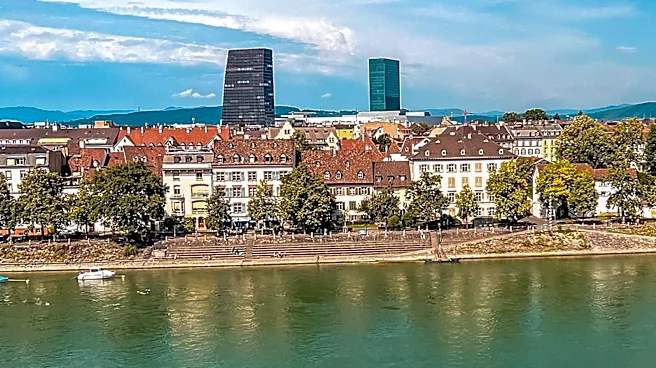
The Rhine River in Europe is experiencing critically low water levels due to ongoing heat waves, posing a significant risk to energy supplies. The river, a crucial transportation route for coal and fuels,
has seen water levels at Kaub drop to 28 centimeters, the lowest since 2018. This decline is causing a bottleneck in the delivery of essential resources to southern Germany and Switzerland, leading to increased shipping costs. The situation is exacerbated by forecasts predicting further drops in water levels, potentially reaching a 36-year low. The heat and dryness have also stressed power systems and public health services across Europe.
Why It's Important?
The low water levels on the Rhine River have far-reaching implications for energy supply chains in Europe, particularly as the continent grapples with climate change and its effects. The disruption in coal and fuel transportation could lead to energy shortages and increased costs for industries reliant on these resources. This situation highlights the vulnerability of critical infrastructure to climate-related events and underscores the need for adaptive strategies to mitigate such risks. The economic impact could extend beyond Europe, affecting global markets and trade dynamics.
What's Next?
With no significant rainfall expected, the situation on the Rhine is likely to worsen, prompting authorities to explore alternative transportation methods and supply chain adjustments. Governments and industries may need to implement emergency measures to ensure energy security and mitigate economic impacts. The ongoing heat wave could also prompt further discussions on climate adaptation and resilience strategies at both national and international levels.