



What's Happening?
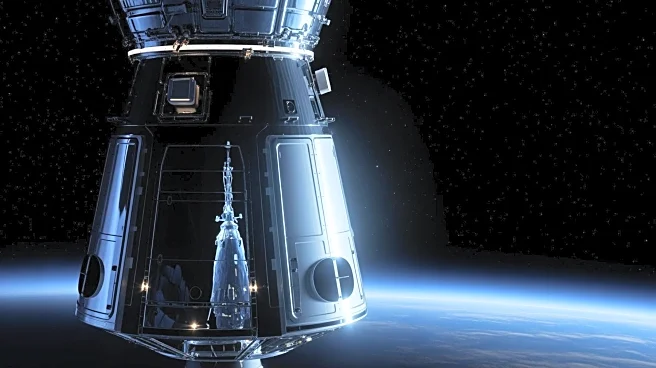
NASA astronaut Jonny Kim and Roscosmos cosmonauts Sergey Ryzhikov and Alexey Zubritsky are set to depart the International Space Station (ISS) aboard the Soyuz MS-27 spacecraft. The crew will close the hatch between the spacecraft and the ISS at 5:10
p.m. EST, with undocking scheduled for 8:41 p.m. The spacecraft is expected to make a parachute-assisted landing in Kazakhstan at 12:04 a.m. on December 9. This mission marks the first spaceflight for Kim and Zubritsky, while Ryzhikov concludes his third mission, bringing his total time in space to 603 days. The crew's departure is being broadcast live on NASA+, Amazon Prime, and YouTube, allowing the public to witness the culmination of their 245-day mission.
Why It's Important?
The departure of the Soyuz MS-27 crew signifies the successful completion of another chapter in international space collaboration. The mission's success is vital for ongoing research and development in space exploration, providing valuable data on the effects of long-duration space missions on human health and performance. This information is crucial for planning future missions to the Moon and Mars, as it helps refine life support systems and mission protocols. The live coverage of the event also highlights NASA's commitment to transparency and public engagement, fostering interest and support for space exploration initiatives.
What's Next?
After landing, the crew will undergo medical evaluations and debriefings to assess their health and gather insights from their mission experiences. These assessments are essential for improving future missions and ensuring astronaut safety. The data collected will be analyzed to enhance understanding of the impacts of space travel on the human body. The ISS will continue to host international crews, with upcoming missions planned to further scientific research and technological development in space. The insights gained from this mission will inform preparations for NASA's Artemis program, which aims to return humans to the Moon and eventually send astronauts to Mars.