





What's Happening?
The U.S. Department of Agriculture’s (USDA) Animal and Plant Health Inspection Service (APHIS) has opened a 60-day public comment period for a petition from Mozza Foods, Inc. Mozza is seeking to deregulate its MF1786-1 soybean, a genetically engineered
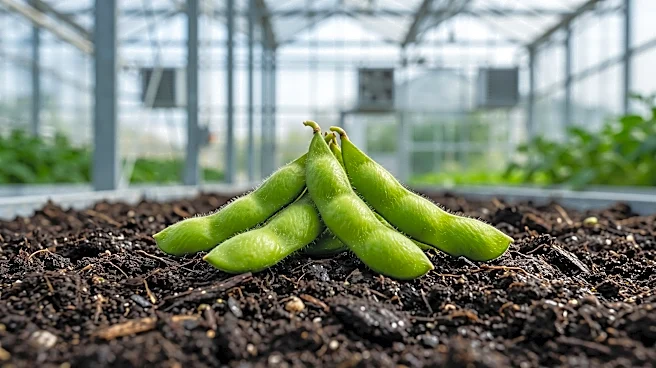
(GE) variety designed to produce mammalian milk proteins, specifically bovine alpha S1, beta, and kappa casein proteins, in its seeds. This process is referred to as molecular farming. Mozza's petition argues that the MF1786-1 soybean does not meet the criteria for continued regulation under the Plant Protection Act (PPA) because it does not pose a plant pest risk. APHIS has conducted a Plant Pest Risk Assessment (PPRA) and preliminarily concluded that the MF1786-1 soybean is unlikely to pose a greater plant pest risk than its non-modified counterpart. The public comment period will conclude on January 11, 2027, and APHIS encourages the submission of scientific data, studies, or research to support comments.
Why It's Important?
The potential deregulation of the MF1786-1 soybean marks a significant step for molecular farming in the agricultural industry. If approved, this would allow farmers to widely cultivate these genetically modified soybeans across state lines without APHIS oversight, paving the way for increased production of dairy proteins from plant sources. This development could offer an alternative to traditional animal agriculture for producing milk proteins, potentially impacting the dairy industry and offering new options for food production. Mozza Foods, Inc. is also engaged in ongoing consultation with the U.S. Food and Drug Administration (FDA) to ensure the safety of human food and animal feed derived from these soybeans, highlighting the multi-agency regulatory oversight involved in bringing such novel agricultural products to market.
What's Next?
The public comment period for the deregulation petition will close on January 11, 2027. Following this period, APHIS will review all submitted scientific data, studies, and research before making a final determination on Mozza Foods, Inc.'s petition. If APHIS grants deregulation, the MF1786-1 soybean could be widely cultivated without federal oversight regarding plant pest risk. Mozza will continue its consultation with the FDA to ensure the safety of the soybean for food and feed applications. The outcome of this deregulation process will set a precedent for future molecular farming initiatives and could influence investment and research in plant-based protein production.
Beyond the Headlines
This development in molecular farming raises broader questions about the future of food production, the intersection of biotechnology and agriculture, and consumer acceptance of genetically engineered products that produce animal-derived proteins. The ability to produce mammalian milk proteins in plants could lead to more sustainable and potentially more efficient methods of protein production, reducing reliance on traditional livestock farming. However, it also brings into focus discussions around labeling, consumer perception of 'plant-based' versus 'animal-derived' ingredients, and the long-term ecological and economic impacts of such innovations on existing agricultural sectors. The regulatory framework for these novel products will continue to evolve as technology advances, necessitating careful consideration of scientific, ethical, and market implications.