






What's Happening?
President Trump is set to host the FIFA World Cup in the United States, alongside Mexico and Canada, amid a backdrop of national and international challenges. The event, which coincides with the 250th anniversary of America, is seen by Trump as an opportunity
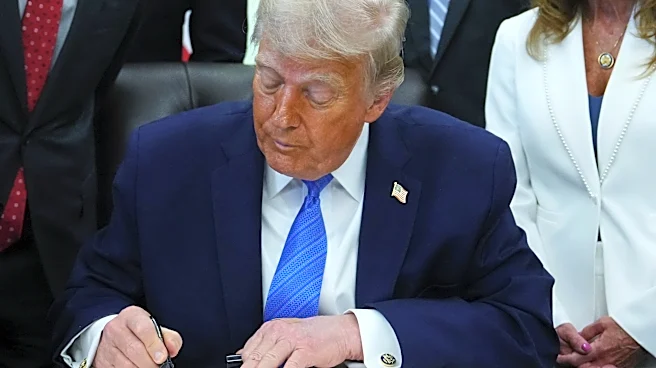
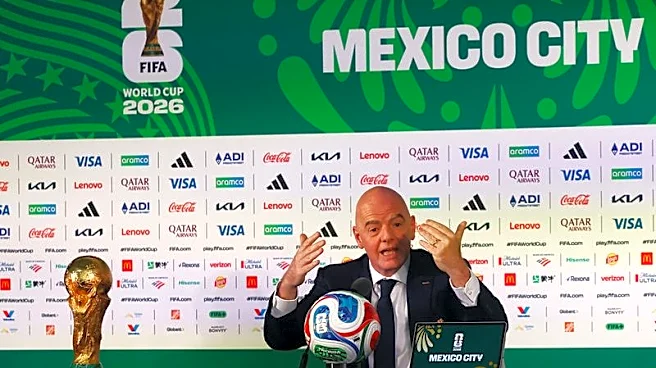
for national pride and self-promotion. Despite his limited personal engagement with soccer, Trump has positioned himself as a 'soccer president,' having hosted prominent players like Lionel Messi and Cristiano Ronaldo at the White House. The tournament comes at a time when the U.S. is facing an unpopular war, rising gas prices, and potential political setbacks in the upcoming midterm elections. Trump's involvement in the World Cup is marked by his transactional relationship with FIFA President Gianni Infantino, who has frequently visited Trump and presented him with various gifts, including a specially made trophy.
Why It's Important?
The hosting of the FIFA World Cup by the United States under President Trump's administration is significant for several reasons. It represents a major international event that could influence the country's global image and domestic morale. The tournament is expected to generate substantial economic activity, potentially boosting local economies and creating jobs. However, it also highlights the complexities of Trump's foreign policy and domestic challenges, such as travel restrictions affecting fans from certain countries. The event could serve as a platform for Trump to bolster his image as a leader, despite facing criticism and low popularity ratings. The partnership with FIFA also underscores the blending of sports and politics, with potential implications for international relations and sports diplomacy.
What's Next?
As the World Cup approaches, President Trump is likely to continue leveraging the event for political gain, emphasizing themes of national pride and unity. The administration may face scrutiny over its handling of international visitors and the execution of the tournament amid ongoing geopolitical tensions. Stakeholders, including political leaders, businesses, and civil society groups, will be watching closely to assess the impact of the World Cup on the U.S. economy and its international standing. The event could also influence the political landscape ahead of the midterm elections, with potential implications for Trump's party and his future political ambitions.
Beyond the Headlines
The intersection of sports and politics in the context of the FIFA World Cup raises questions about the ethical dimensions of such partnerships. The relationship between President Trump and FIFA President Gianni Infantino highlights the transactional nature of international sports events, where economic and political interests often intersect. This dynamic could lead to long-term shifts in how global sports events are perceived and managed, particularly in terms of transparency and accountability. Additionally, the event may prompt discussions about the role of sports in fostering international cooperation and cultural exchange, against a backdrop of rising nationalism and geopolitical tensions.