

What's Happening?
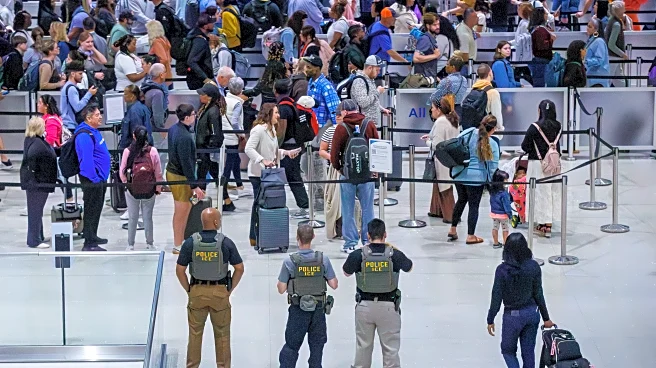
President Trump has proposed deploying Immigration and Customs Enforcement (ICE) agents to provide security at U.S. airports due to a budget impasse affecting the Transportation Security Administration (TSA). The proposal comes as TSA employees are working
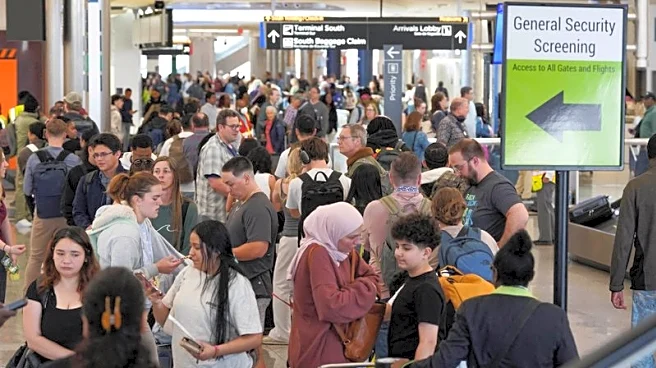
without pay, leading to increased stress and resignations among staff. The funding lapse has resulted in long security lines and financial hardships for TSA workers, prompting tech mogul Elon Musk to offer to cover their salaries. Democrats in Congress have resisted new funding for the Department of Homeland Security (DHS) until changes are made to ICE's enforcement practices. The situation has sparked debate over the use of ICE agents in roles traditionally filled by TSA personnel.
Why It's Important?
The proposal to use ICE agents for airport security highlights the broader issues of funding and resource allocation within federal agencies. It raises questions about the appropriate roles and responsibilities of ICE, an agency primarily focused on immigration enforcement. The situation underscores the impact of political standoffs on essential services and the lives of federal employees. The potential deployment of ICE agents at airports could further polarize public opinion on immigration enforcement and security practices. The proposal also reflects the ongoing challenges in balancing national security needs with civil liberties and the rights of immigrants.
What's Next?
As the budget standoff continues, pressure will mount on Congress to reach a funding agreement to restore normal operations for TSA and other affected agencies. The proposal to use ICE agents at airports may face legal and logistical challenges, as well as opposition from civil rights groups and some lawmakers. The situation could lead to further discussions on immigration policy and the role of federal agencies in domestic security. The outcome of these negotiations will have implications for airport security, federal employees, and the broader debate over immigration enforcement in the U.S.