





What's Happening?
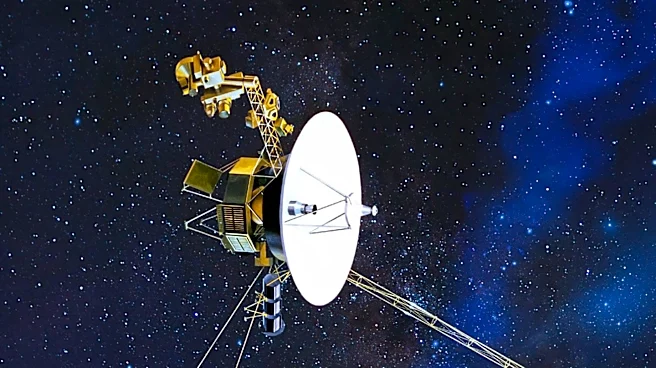
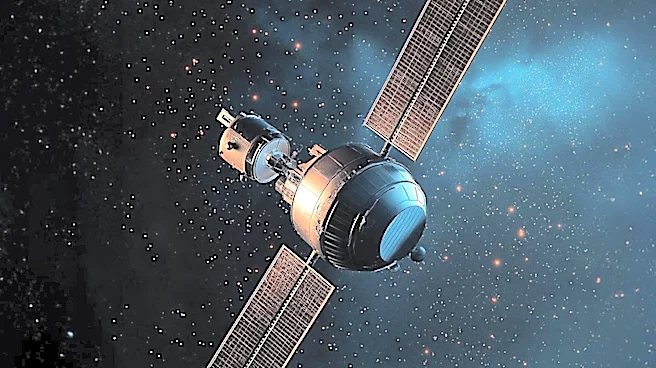
NASA's Jet Propulsion Laboratory has successfully extended the operational life of the Voyager 2 spacecraft by implementing a power-saving procedure known as the 'Big Bang.' This technique involved switching off certain devices and replacing them with
lower-power alternatives, allowing the spacecraft to conserve energy while maintaining functionality. As a result, Voyager 2's three remaining scientific instruments can continue operating for at least another year. This extension is crucial as the spacecraft, launched nearly 50 years ago, continues its interstellar mission, providing valuable data from beyond our solar system.
Why It's Important?
The extension of Voyager 2's mission is a testament to the ingenuity and resourcefulness of NASA's engineers. It highlights the importance of maximizing the lifespan of space missions, especially those that provide unique insights into the outer reaches of our solar system. The data collected by Voyager 2 contributes to our understanding of interstellar space and the heliosphere, offering valuable information for future space exploration missions. This development also underscores the challenges of managing aging spacecraft and the need for innovative solutions to extend their operational capabilities.
What's Next?
NASA plans to apply the same power-saving procedure to Voyager 1, which is even farther from Earth than Voyager 2. This could potentially extend Voyager 1's mission as well, allowing it to continue transmitting data from interstellar space. As both spacecraft approach their 50th anniversary, NASA will continue to explore ways to optimize their performance and extend their missions. The scientific community eagerly anticipates the continued flow of data from these pioneering spacecraft, which have already exceeded their original mission objectives by decades.