

What's Happening?
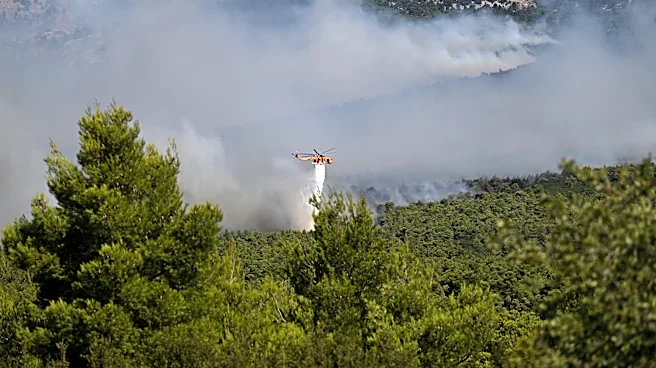
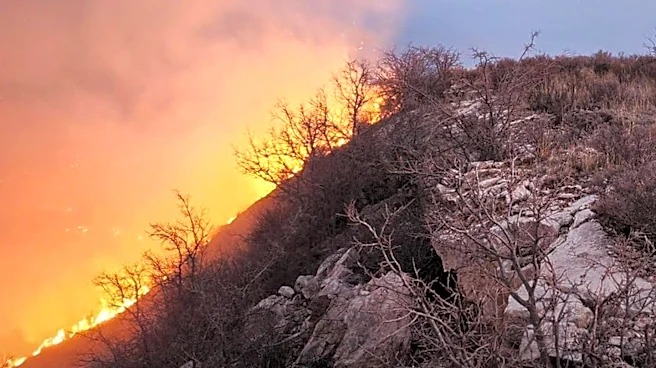
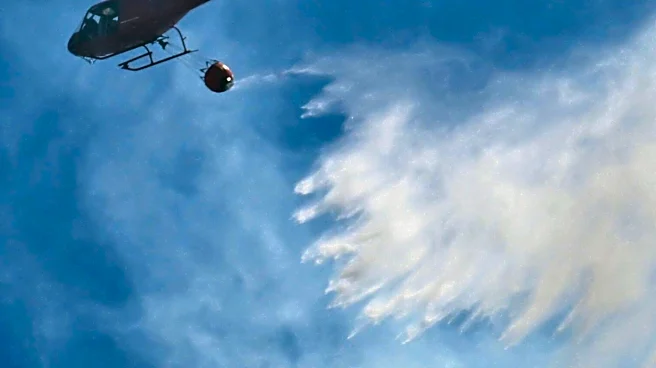
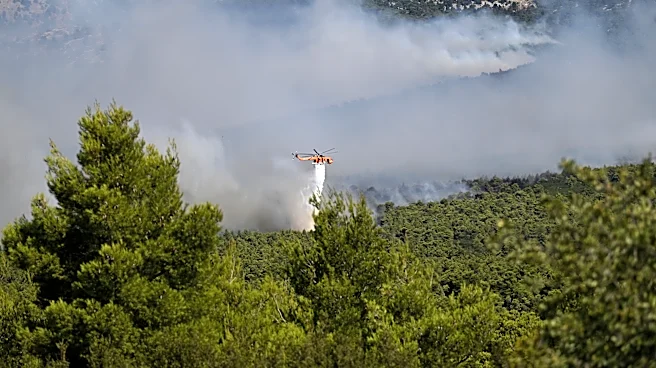
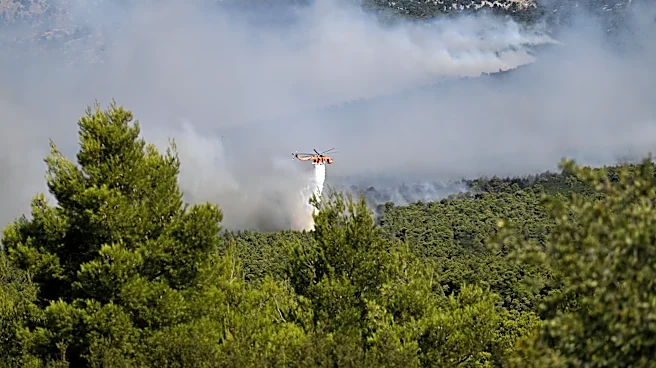
In the village of Le Porge, located in southwest France, devastating wildfires have uncovered a cache of Second World War-era shells. The discovery occurred as flames swept through the area, causing loud explosions and revealing dozens of unexploded munitions.
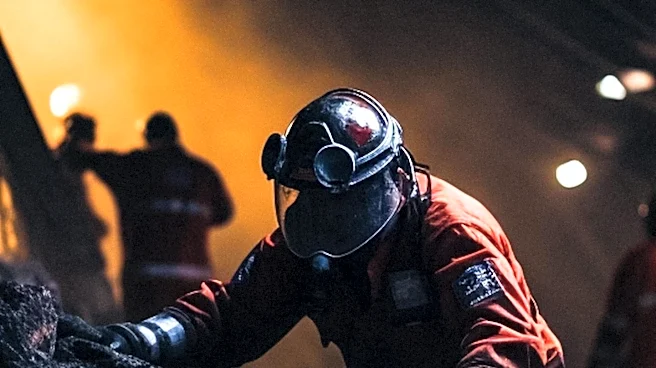
Martial Zaninetti, the mayor of Le Porge, described the shells as making 'war noises' as they were propelled by the heat and force of the fire. The wildfires, which began in mid-July, have destroyed over 180 homes in Le Porge alone. Local authorities were unaware of the ordnance buried in the ground until the blaze exposed them. Firefighters and bomb disposal experts have been deployed to secure the site, and no injuries have been reported. As of Monday, de-miners have recovered 75 shells, with more believed to remain. The munitions are a mix of German and French mortar shells and tank rounds from WWII.
Why It's Important?
The discovery of WWII munitions amidst the wildfires adds a layer of complexity to the emergency response in France. The presence of unexploded ordnance poses a significant risk to residents and emergency personnel, complicating efforts to manage the wildfire crisis. The situation underscores the long-lasting impact of historical conflicts, as remnants from past wars continue to surface and affect communities. The wildfires themselves are a stark reminder of the increasing severity of natural disasters, exacerbated by climate change. The combination of environmental and historical challenges highlights the need for comprehensive disaster preparedness and response strategies that account for both immediate and latent threats.
What's Next?
Authorities are continuing efforts to secure the area and remove the remaining munitions. Once the site is fully cleared, the shells will be transported to a military facility for destruction. The return of residents to affected areas is contingent upon the successful removal of all hazardous materials. The incident may prompt a review of historical ordnance management and emergency response protocols in regions with known wartime remnants. Additionally, the ongoing wildfire crisis in France is likely to lead to increased scrutiny of climate change policies and disaster management strategies at both national and European levels.