





What's Happening?
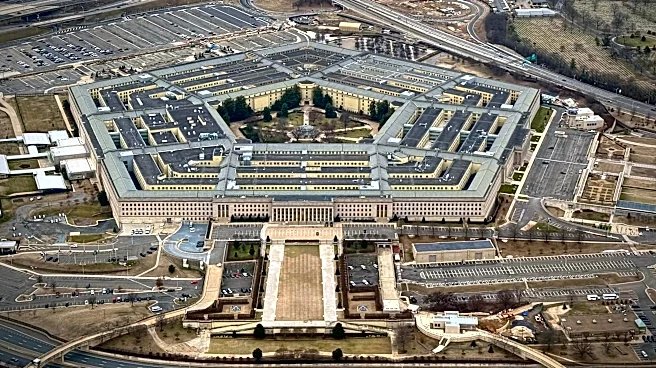
The United States and China are currently involved in a conventional arms race, primarily focused on capabilities relevant to a potential conflict over Taiwan's sovereignty in the Western Pacific. Concurrently, China has initiated a build-up of its nuclear
arsenal, aiming to achieve a secure retaliatory capability against the United States. This development draws parallels to historical arms races, though the current AI competition between the two nations is not characterized as an arms race due to the primary involvement of private companies and the significant lead held by U.S. AI firms. The Cold War nuclear arms race, driven by strategic competition between nation-states, saw the U.S. and Soviet Union possess tens of thousands of nuclear weapons. The Nuclear Nonproliferation Treaty (NPT) codified the status of nuclear powers, allowing non-nuclear states to benefit from nuclear energy while preventing proliferation. This historical context highlights how great powers shaped the global landscape to their advantage.
Why It's Important?
The ongoing conventional arms race between the U.S. and China, coupled with China's nuclear expansion, significantly impacts global strategic stability and U.S. national security interests. The focus on Taiwan's sovereignty underscores a critical geopolitical flashpoint, where increased military capabilities on both sides raise the risk of miscalculation and escalation. China's pursuit of a secure retaliatory nuclear capability alters the balance of power, potentially complicating deterrence strategies and increasing the complexity of future international relations. While the AI competition is distinct, the historical lessons from nuclear arms control suggest that agreements are most feasible when states lack incentives to build more weapons, or when such agreements serve self-interested motives rather than purely humanitarian ones. This dynamic implies that any future arms control efforts, whether conventional or nuclear, will likely be driven by national interests and strategic advantage.
What's Next?
The trajectory of the U.S.-China conventional arms race will likely continue to be shaped by developments in the Western Pacific and the issue of Taiwan's sovereignty. China's nuclear build-up will necessitate ongoing monitoring and strategic adjustments from the United States and its allies. Future discussions on arms control, particularly concerning nuclear weapons, will face challenges given the historical skepticism regarding their effectiveness when states have strong incentives to expand their arsenals. The potential for agreements, whether in conventional or nuclear domains, may depend on whether they align with the self-interested motives of the involved nations, rather than solely on broader humanitarian concerns. The role of private companies in technological advancements, particularly in AI, also presents a new dimension to strategic competition, potentially complicating traditional state-centric arms control frameworks.
Beyond the Headlines
The current arms race dynamics between the U.S. and China, particularly China's nuclear expansion, raise profound questions about the nature of deterrence in the 21st century. The historical context of the Cold War nuclear arms race, where the abstract threat of nuclear catastrophe was ever-present but often difficult for the public to grasp, offers a lens through which to view contemporary existential threats, including those posed by advanced AI. The skepticism surrounding the efficacy of arms control agreements, often driven by national interests rather than global goodwill, suggests a pragmatic approach to future negotiations. This implies that any successful arms control initiatives will likely require a convergence of self-interested motives among key players. The increasing involvement of private companies in developing dual-use technologies like AI further blurs the lines between state and non-state actors in strategic competition, posing new challenges for traditional security frameworks and international governance.