




What's Happening?
Norway has arrested the Russian research and passenger vessel Professor Molchanov in the port of Barentsburg, located in the Svalbard archipelago. This action was taken at the request of Naftogaz Group, a Ukrainian company, as part of its efforts to enforce
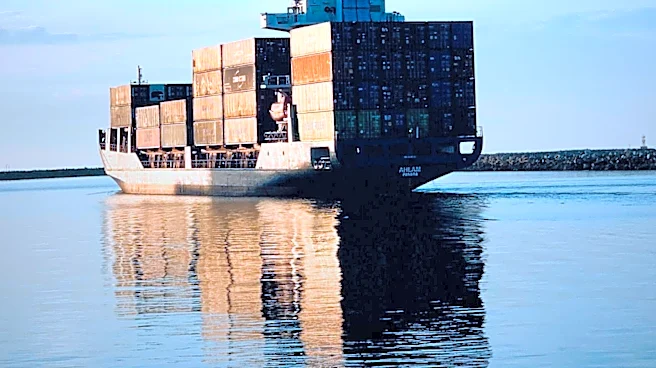
Russia's payment of compensation for Ukrainian assets seized in annexed Crimea. The District Court of Nord-Troms and Senja issued the arrest order on August 31, aiming to secure payments mandated by an international arbitration tribunal ruling. Russia's outstanding financial obligations to Naftogaz Group are approximately $4.2 billion, a figure that does not include interest and legal costs. The Professor Molchanov, built in 1982, is a specialized hydrographic and oceanographic vessel with enhanced ice-class protection, and has recently been used for commercial passenger and research cruises in the Arctic. The court order explicitly prohibits the vessel from leaving its berth, and the Governor of Svalbard has been instructed to ensure it remains stationary.
Why It's Important?
This arrest underscores the ongoing international legal and economic repercussions stemming from Russia's annexation of Crimea. For U.S. and international businesses, particularly those with investments or operations in Ukraine or Russia, this event highlights the significant risks and complexities associated with geopolitical conflicts and the enforcement of international arbitration awards. The seizure of a state-affiliated vessel demonstrates a tangible consequence for Russia's actions, potentially setting a precedent for other entities seeking compensation for damages incurred due to the annexation. It also signals a continued commitment by Western nations, like Norway, to uphold international law and support Ukraine's claims. The financial implications for Russia, with billions in outstanding obligations, could further strain its economy and its ability to conduct international commerce, impacting global markets and trade relations. This situation could also influence future investment decisions and risk assessments for companies operating in politically volatile regions.
What's Next?
The immediate next steps will likely involve legal proceedings to determine the fate of the Professor Molchanov. Russia is expected to challenge the arrest, potentially leading to a protracted legal battle in Norwegian courts. Naftogaz Group will continue its efforts to enforce the international arbitration ruling, possibly pursuing similar actions against other Russian assets in various jurisdictions. This event could encourage other Ukrainian entities or international claimants to seek the seizure of Russian state-owned or affiliated assets globally to recover losses related to the annexation of Crimea. The U.S. government and its allies will likely monitor the situation closely, as it aligns with their broader strategy of imposing economic pressure on Russia. The outcome of this case could influence future diplomatic relations between Norway and Russia, and potentially impact Arctic research and commercial activities involving Russian vessels.
Beyond the Headlines
Beyond the immediate legal and financial aspects, this incident touches upon the broader issue of sovereign immunity and the enforceability of international arbitration awards against state assets. The use of a research vessel for commercial purposes, and its subsequent seizure, raises questions about the dual-use nature of certain state assets and their vulnerability in international disputes. This case could contribute to the evolving legal framework surrounding the seizure of state assets for compensation, potentially influencing how international law is applied in future geopolitical conflicts. It also highlights the long-term economic and political fallout of territorial disputes, where the consequences can manifest years after the initial events. The incident could also prompt a re-evaluation of risk management strategies for international shipping and research operations, particularly for vessels associated with states involved in international disputes.