








What's Happening?
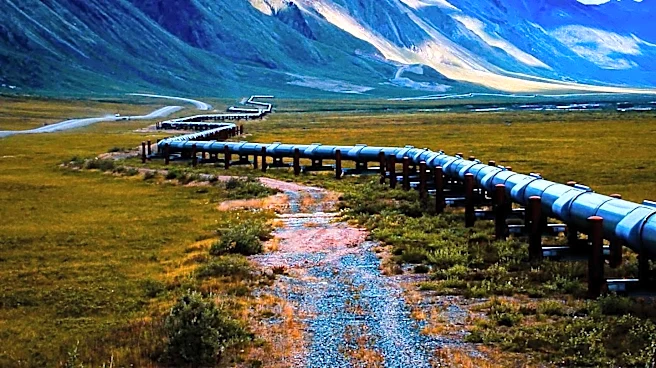
Alberta is facing challenges with its proposed one-million-barrel-per-day west-coast pipeline due to insufficient oil production to justify the project. The pipeline, which is intended to transport oil from the Edmonton region to southern British Columbia,
is being developed by Trans Mountain, the Alberta Petroleum Marketing Commission, and Pembina. The Alberta Energy Regulator forecasts an increase in raw bitumen output from 3.558 million barrels per day in 2024 to 4.061 million in 2034, primarily through optimization and expansion of existing facilities. However, this growth is insufficient to fill the proposed pipeline, which would require a significant increase in oil production. The project is further complicated by the need for substantial new investments in oil-sands development, estimated at C$100 billion, to support the pipeline's capacity.
Why It's Important?
The proposed pipeline is significant as it represents a major infrastructure project aimed at enhancing Alberta's oil export capacity. However, the lack of sufficient oil production to fill the pipeline raises concerns about its economic viability. The project requires substantial public investment and carries risks related to underutilization and market demand. If the pipeline cannot secure enough volume, it could result in financial losses for public stakeholders and impact the broader oil industry. Additionally, the project highlights the challenges of balancing economic growth with environmental and regulatory considerations in the energy sector.
What's Next?
For the pipeline to proceed, Alberta must secure commitments from oil producers to increase production and fill the pipeline. This may involve policy support and financial incentives to encourage new oil-sands development. The project also requires regulatory approvals and market commitments from potential buyers. If these conditions are not met, the pipeline may face delays or cancellation. Stakeholders will need to assess the project's commercial viability and address the risks associated with public investment in such large-scale infrastructure.
Beyond the Headlines
The pipeline project raises broader questions about the future of the oil industry in Alberta and Canada. It underscores the need for strategic planning to ensure that infrastructure investments align with market demand and environmental goals. The project also highlights the potential for public-private partnerships in developing energy infrastructure, as well as the challenges of managing political and economic risks in the sector. As global energy markets evolve, Alberta's ability to adapt and innovate will be crucial for its long-term economic sustainability.