




What's Happening?
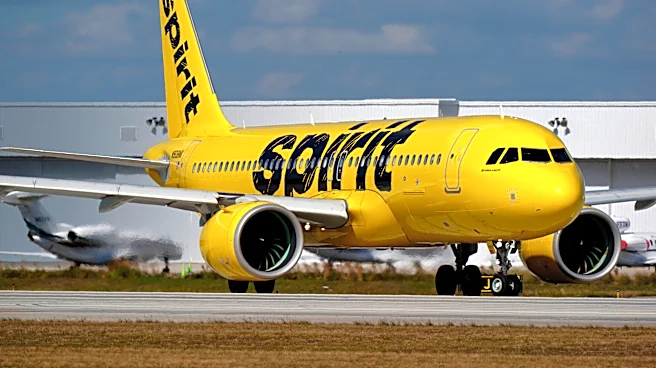
Spirit Airlines, a well-known budget carrier, has permanently ceased operations after failing to secure a $500 million bailout. The sudden shutdown has left many travelers stranded, as the airline announced the cancellation of all flights effective immediately.
Spirit, which has been in operation for 34 years, plans to refund customers, but the lack of customer service and immediate flight alternatives has caused significant distress among passengers. Many have taken to social media to express their frustrations, with some travelers finding themselves paying exorbitant prices for last-minute flights with other airlines. The closure marks the end of an era for cost-conscious travelers who relied on Spirit for affordable air travel.
Why It's Important?
The closure of Spirit Airlines has significant implications for the U.S. travel industry, particularly for budget-conscious consumers. As one of the nation's largest low-cost carriers, Spirit's shutdown reduces competition in the budget airline sector, potentially leading to higher prices across the board. Other airlines may capitalize on the situation by increasing fares, as seen with some travelers paying up to $900 for one-way tickets. This development could also impact the broader airline industry, as it highlights the financial vulnerabilities of carriers in the face of economic challenges. The loss of Spirit Airlines may lead to increased scrutiny of the financial health of other budget airlines and their ability to withstand economic pressures.
What's Next?
In the wake of Spirit Airlines' closure, affected travelers will need to seek alternative travel arrangements, often at a higher cost. The airline's decision to refund tickets may provide some relief, but the immediate need for rebooking flights remains a pressing issue. Other airlines may see an influx of new customers, potentially straining their capacity and resources. Additionally, there may be calls for regulatory reviews of airline financial practices and the need for more robust consumer protections in the event of sudden airline closures. The travel industry will likely monitor the situation closely to assess the long-term impacts on pricing and competition.