





What's Happening?
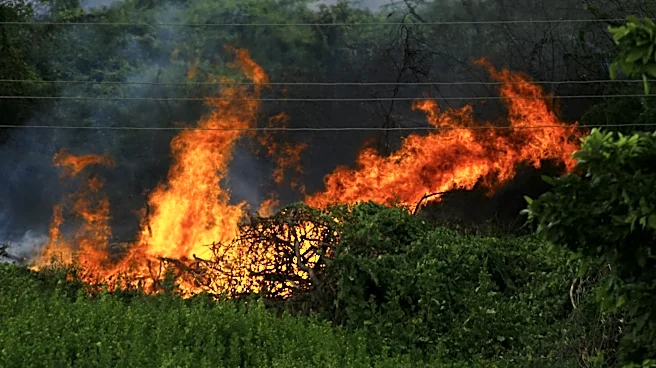
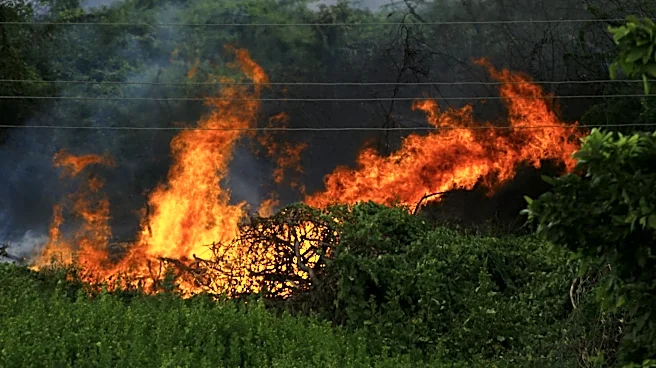
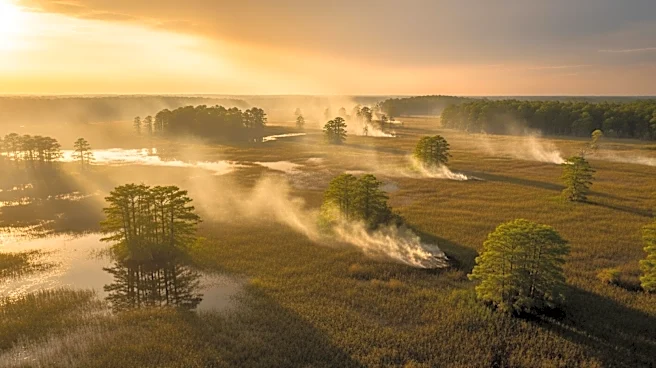
A significant wildfire in West Broward, Florida, has burned over 11,000 acres, raising concerns about long-term environmental impacts. Dr. Steve Davis, the Everglades science chief, has highlighted the severe drought conditions and 'muck fires' as major
threats to South Florida's natural landscape. These fires could permanently alter the region's water-absorbing capabilities, affecting both the local ecosystem and human populations. The Everglades, known for its unique biodiversity and critical role in water management, faces potential changes that could disrupt habitats and water flow patterns. The ongoing drought exacerbates the situation, making it difficult to control the spread of the fire and increasing the risk of long-lasting damage.
Why It's Important?
The Everglades is a vital component of South Florida's environment, serving as a natural water filtration system and habitat for numerous species. The potential alteration of this landscape due to the wildfire could have significant ecological and economic repercussions. Changes in water absorption and flow could impact agriculture, water supply, and flood management in the region. Additionally, the loss of habitat could threaten local wildlife, some of which are already endangered. The situation underscores the broader challenges posed by climate change, as increased temperatures and prolonged droughts make such wildfires more frequent and severe. Addressing these issues requires coordinated efforts in environmental management and policy-making to mitigate future risks.