






What's Happening?
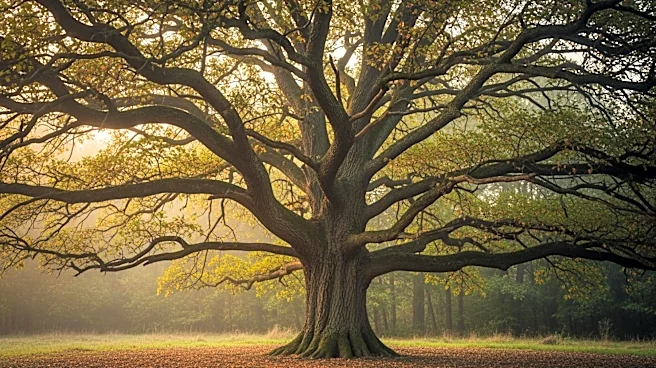
The Major Oak, a 1,200-year-old tree in England's Sherwood Forest, has died. This tree, historically linked to the legend of Robin Hood, failed to produce new leaves this spring, indicating its demise. The Royal Society for the Protection of Birds (RSPB)
attributes the tree's decline to soil compression from millions of visitors and recent hot, dry summers. Despite its death, the tree will remain standing as a natural monument, continuing to support the forest ecosystem. The Major Oak, with a canopy spread of 28 meters and a trunk circumference of 11 meters, was one of the largest trees in Britain. Efforts to support the tree included placing supports under its branches in the early 20th century and fencing it off in the 1970s.
Why It's Important?
The death of the Major Oak highlights the impact of human activity and climate change on ancient natural landmarks. The tree's decline due to soil compaction from tourism and extreme weather conditions underscores the need for sustainable tourism practices and climate resilience strategies. The Major Oak's cultural significance as part of the Robin Hood legend has made it a major tourist attraction, drawing millions of visitors. Its death serves as a warning about the fragility of ancient trees and the importance of preserving natural heritage. The tree's continued presence as a monument will still provide ecological benefits, supporting wildlife and maintaining its role in the forest ecosystem.
What's Next?
The Major Oak will remain standing as a natural monument, with efforts to ensure its legacy continues through saplings grown from its acorns. These saplings have been planted worldwide, including at the residence of the US ambassador in London. The RSPB and other conservation bodies may use the knowledge gained from the Major Oak's decline to protect other ancient trees. This situation may prompt discussions on enhancing legal protections for ancient trees and implementing measures to mitigate the effects of climate change and tourism on such natural landmarks.