



What's Happening?
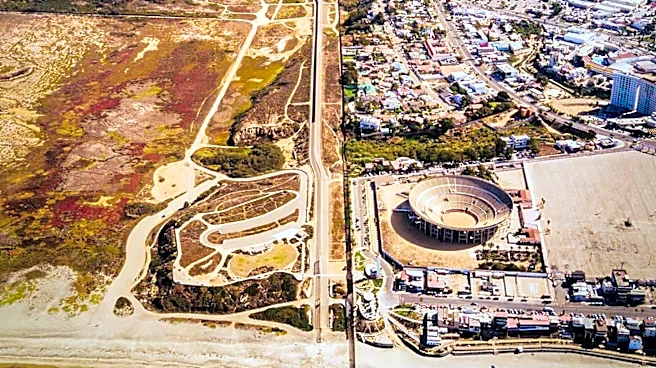
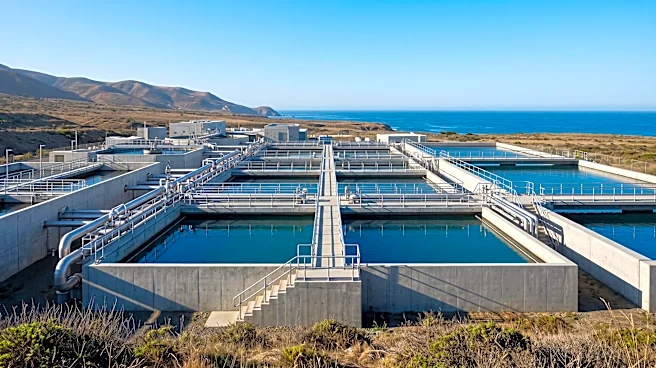
San Diego County supervisors have voted 4-1 to construct a sewage treatment system on the U.S. side of the border with Mexico. Additionally, they unanimously supported replacing failing box culverts beneath Saturn Boulevard. These actions are direct responses
to the ongoing Tijuana River pollution crisis. The initiative, spearheaded by Supervisors Paloma Aguirre and Terra Lawson-Remer, will unfold in three phases. While existing facilities on both sides of the border aim to capture and treat sewage, they lack the capacity to handle all polluted water flowing through the river. The approved measure includes emergency declarations, potential state legislation to expedite permitting, and the allocation of $1.8 million to the Department of Public Works for the project's initial phase. It also establishes a local capture and treatment system designed to give the region control over polluted river flows before they impact communities and the coastline. Supervisor Joel Anderson cast the sole dissenting vote, expressing concerns about the county acting alone and suggesting a coalition approach for managing high project costs.
Why It's Important?
This decision is crucial for public health, environmental protection, and the economic well-being of San Diego County. The Tijuana River pollution crisis has led to hydrogen sulfide levels in the air reaching 4,500 times higher than the state standard, posing significant health risks to residents. The new treatment system aims to safeguard public health by preventing polluted water from reaching communities and the coastline. Environmentally, it will reduce the release of harmful gases and improve flood protection, making access to the Tijuana River Valley Regional Park more reliable. Economically, the long-term future of the region, particularly its coastal areas and tourism, depends on addressing this pollution. The initiative also signifies a shift towards local control over a transboundary issue, as it seeks to establish a system that doesn't solely rely on Mexican infrastructure. While Supervisor Anderson raised valid points about the cost and the need for broader collaboration, the urgency of the situation, as highlighted by Supervisor Aguirre's two decades of advocacy, underscores the importance of immediate action to mitigate the crisis's severe impacts.
What's Next?
The Tijuana River Capture and Cleanup Initiative will proceed in three phases, with the first phase involving the allocation of $1.8 million to the Department of Public Works. Emergency declarations and potential state legislation will be pursued to accelerate the permitting process for the new treatment system. The board's ad hoc subcommittee on the sewage crisis will be converted into a standing committee to provide ongoing oversight of every project phase. Supervisors Aguirre and Lawson-Remer have also requested an additional $4 million for the design, environmental review, and permitting of the project to replace the box culverts under Saturn Boulevard. While the county moves forward with these plans, there will likely be continued efforts to engage with Mexico and the federal government to address the broader transboundary pollution issues. The effectiveness of the new U.S.-side treatment plant and the success of the culvert replacement project will be closely monitored, with residents and environmental groups expecting tangible improvements in air and water quality.
Beyond the Headlines
The San Diego County supervisors' decision highlights the complex challenges of managing transboundary environmental issues and the limitations of relying solely on international agreements. The long-standing nature of the Tijuana River pollution, spanning over 60 years, underscores a deeper systemic problem where political will and funding have often lagged behind the escalating environmental and public health crises. The debate over whether to act unilaterally or build a broader coalition reflects a tension between immediate local needs and the desire for comprehensive, binational solutions. This initiative could set a precedent for other border regions facing similar environmental challenges, demonstrating a proactive approach to protect local communities when international cooperation proves insufficient or slow. Furthermore, the emphasis on local control and dedicated funding signals a recognition that environmental justice is paramount, ensuring that all residents, regardless of their proximity to the border, have a right to clean air and water. The project's success could also influence future federal and state policies regarding cross-border environmental infrastructure and funding mechanisms.