



What's Happening?
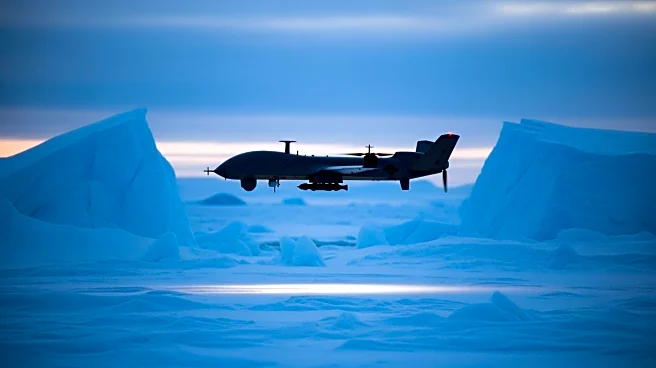
A recent analysis by the Center for European Policy Analysis (CEPA) highlights the growing threat of Russian unmanned systems in the Arctic, particularly as the conflict with Ukraine winds down. The report suggests that NATO and its Arctic allies should
anticipate Russia's use of uncrewed systems as force multipliers, which could create operational challenges for the alliance. The analysis also points to the potential for NATO to leverage unmanned systems to counter threats from Russia, China, and other geopolitical competitors. The report emphasizes the importance of counter-unmanned systems (C-UxSs) as a priority for capability development, given the scalability and operational flexibility of drones.
Why It's Important?
The increasing use of unmanned systems in the Arctic represents a significant shift in military strategy, with implications for global security dynamics. The potential for an 'Arctic drone race' could escalate tensions and lead to a new security dilemma, as countries seek to enhance their surveillance and targeting capabilities. This development underscores the need for NATO to adapt its defense strategies to address the unique challenges posed by unmanned systems, which could lower the threshold for force use and introduce new risks, such as information overload and autonomous unpredictability.
What's Next?
As NATO and its allies consider their response to the unmanned threats in the Arctic, there may be increased investment in counter-unmanned systems and related technologies. This could involve enhancing surveillance and reconnaissance capabilities, as well as developing strategies to mitigate the risks associated with autonomous systems. The evolving security landscape in the Arctic may also prompt discussions on international regulations and agreements to manage the use of unmanned systems in this strategically important region.