





What's Happening?
U.S. Senator James E. Risch (R-Idaho) has introduced S. 5484, titled the 'Affordable Housing Over Mandating Efficiency Standards Act of 2026,' on September 23, 2026. The bill, which currently has five cosponsors, aims to modify federal rules concerning
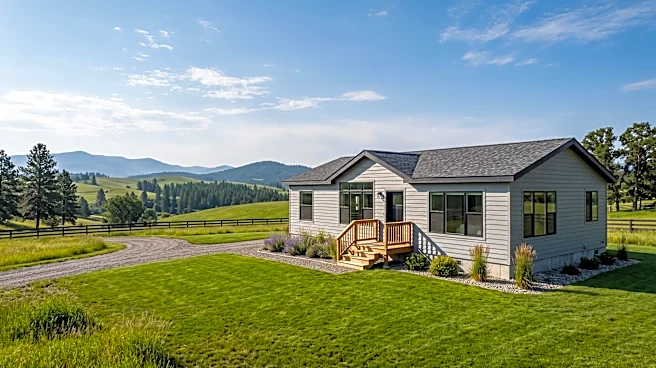
energy efficiency standards for manufactured homes. Specifically, it seeks to prevent the Department of Energy (DOE) from enforcing its 2022 final rule on 'Energy Conservation Program: Energy Conservation Standards for Manufactured Housing.' Instead, the bill proposes that the Secretary of Energy would only be able to recommend changes to these standards, with a mandatory evaluation of cost-effectiveness, including both construction and operational costs, and the impact on the initial purchase price of manufactured homes.
Why It's Important?
This legislation is significant because it directly addresses the balance between energy efficiency goals and housing affordability, particularly for manufactured homes. The 2022 DOE rule aimed to improve energy conservation, but Senator Risch's bill suggests that these mandates could increase the upfront cost of manufactured homes, potentially making them less accessible for low-income individuals and families. Manufactured homes often serve as a crucial affordable housing option, and any policy that significantly raises their cost could exacerbate housing shortages and affordability crises. By limiting the DOE's enforcement power and requiring a thorough cost-benefit analysis, the bill seeks to ensure that energy efficiency standards do not inadvertently create barriers to affordable housing, thereby impacting a significant segment of the U.S. population.
What's Next?
The 'Affordable Housing Over Mandating Efficiency Standards Act of 2026' will now undergo the legislative process in the Senate. This will involve committee review, potential amendments, and a vote. If it passes the Senate, it would then move to the House of Representatives for their consideration. Should the bill become law, the Department of Energy's role in setting and enforcing energy efficiency standards for manufactured homes would be significantly altered. The DOE would be restricted to making recommendations, which would have to consider various factors such as construction methods, climate zones, alternative energy performance solutions, and the recovery period for upfront costs. This could lead to a re-evaluation of existing and future energy efficiency regulations for manufactured housing, with a greater emphasis on affordability.
Beyond the Headlines
This bill highlights a broader tension in public policy between environmental sustainability and economic accessibility. While energy efficiency is a critical component of climate action and long-term cost savings for homeowners, the immediate financial burden of implementing such standards can disproportionately affect vulnerable populations. The legislation implicitly raises questions about who bears the cost of environmental regulations and how these costs impact different socioeconomic groups. It also underscores the ongoing debate about federal agency overreach versus legislative control in setting industry standards. The outcome of this bill could set a precedent for how future environmental regulations are balanced with affordability concerns in other sectors, potentially influencing the approach to sustainable development across the U.S. economy.