

What's Happening?
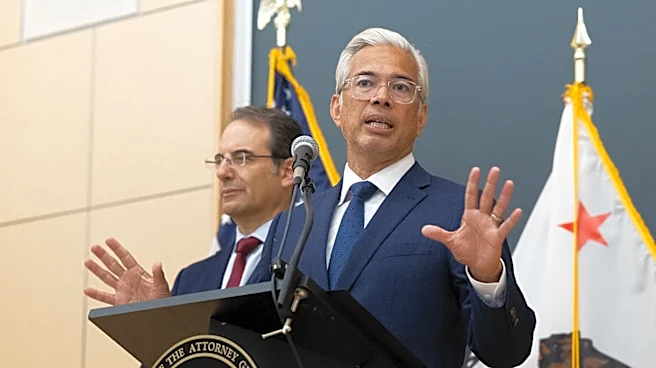
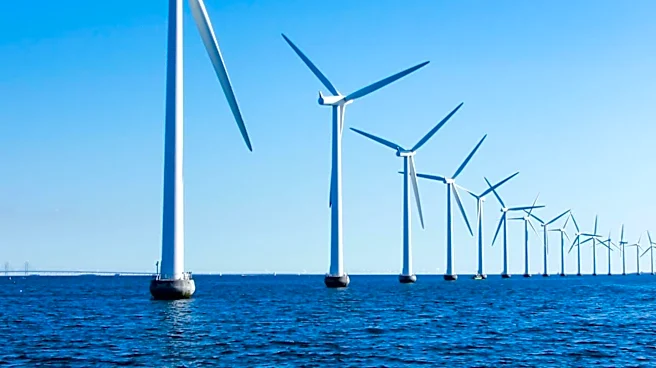
California Attorney General Rob Bonta and the California Energy Commission (CEC) have issued a Notice of Intent to Sue the U.S. Department of the Interior (DOI) and RWE U.S. Offshore. This action challenges an agreement where the DOI would reallocate
$1.22 billion in federal taxpayer dollars to RWE to cancel three offshore wind energy leases off the coasts of California, Louisiana, and New York. In exchange, RWE would be required to invest the same amount in out-of-state fossil-fuel projects. Attorney General Bonta and CEC Chair David Hochschild assert that this agreement is an unlawful attempt by the Trump administration to undermine California's offshore wind energy development and divert public funds to fossil fuel projects, some reportedly linked to President Trump's donors. California has invested over $100 million in its offshore wind infrastructure and aims to develop 25 gigawatts of offshore wind power by 2045.
Why It's Important?
This legal challenge highlights a significant conflict between state-level clean energy initiatives and federal actions perceived as favoring fossil fuels. California's ambitious goal of 25 gigawatts of offshore wind power by 2045 is crucial for its clean energy transition, energy independence, and job creation. The alleged reallocation of federal funds from offshore wind to fossil fuel projects could severely impede California's progress, potentially stranding public investments in port infrastructure and related industries. This dispute also raises questions about the integrity of federal decision-making regarding energy policy, particularly allegations of political influence and the redirection of taxpayer money. The outcome of this legal battle could set a precedent for how federal administrations interact with state-level energy policies and the future of renewable energy development versus fossil fuel expansion in the U.S.
What's Next?
The Notice of Intent to Sue provides a 60-day window for the DOI and RWE to address the alleged violations of the Outer Continental Shelf Lands Act (OCSLA). If the issues are not resolved within this period, California intends to file a lawsuit to halt the buyout agreement. This legal action will likely involve a detailed examination of the OCSLA and the legality of reallocating funds designated for offshore wind to fossil fuel projects. The case could lead to a judicial review of the Trump administration's energy policies and their impact on state-level clean energy goals. The resolution of this challenge will have implications for RWE's investment plans and could influence future federal-state collaborations or conflicts over energy development across the country.
Beyond the Headlines
This situation delves into the broader ideological and policy clash between promoting renewable energy and supporting traditional fossil fuel industries. The allegations of redirecting public funds to projects linked to political donors introduce an ethical dimension, suggesting potential conflicts of interest and a lack of transparency in federal energy decisions. The dispute also underscores the vulnerability of long-term clean energy projects to shifts in federal administration priorities. California's proactive stance reflects a growing trend of states taking independent action to advance climate goals, even in the face of federal opposition. This case could become a landmark legal challenge, shaping the future regulatory landscape for offshore wind development and the balance of power between federal and state governments in energy policy.