





What's Happening?
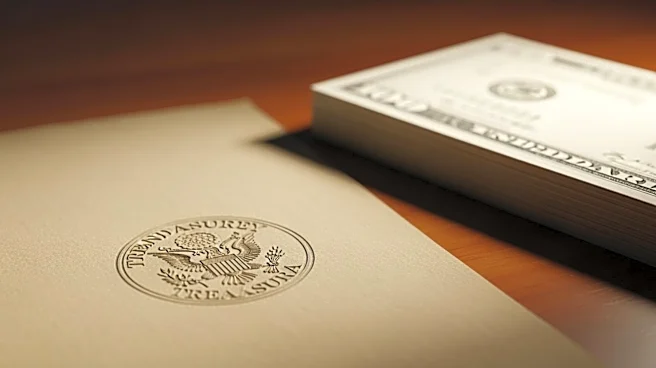
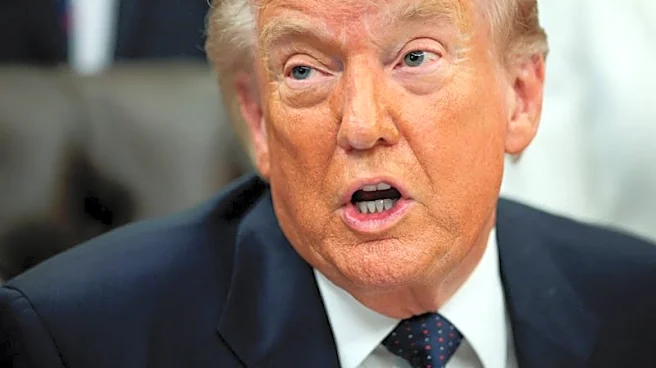
The Treasury Department is advancing plans for a new $250 bill featuring President Donald Trump, despite a longstanding federal law prohibiting living individuals from appearing on U.S. currency. This initiative aligns with a bill introduced by Representative
Joe Wilson, which seeks to amend the law to allow living presidents on currency. The Bureau of Engraving and Printing has prepared a design for the bill, but without congressional approval, the proposal remains symbolic. The 1866 law, enacted after a Treasury official's portrait appeared on a 5-cent note, remains a significant legal barrier. The proposal has sparked internal tensions within the Treasury, leading to the reassignment of the Bureau's director, Patricia Solimene, who resisted the push due to legal and procedural concerns.
Why It's Important?
The proposal to feature President Trump on a $250 bill is significant as it challenges a long-standing legal precedent and could set a new standard for U.S. currency. If successful, it would mark an extraordinary recognition for a sitting president and could influence future commemorative currency decisions. The initiative reflects President Trump's influence and the administration's efforts to embed his legacy into national celebrations, such as the 250th anniversary of the United States. However, it also raises questions about the politicization of currency and the potential for legal and logistical challenges, impacting the Treasury's operations and the timeline for the proposed bill's production.
What's Next?
For the $250 bill to become a reality, Congress must amend the 1866 law prohibiting living individuals on currency. The bill introduced by Representative Joe Wilson is currently stalled in the House Financial Services Committee. If lawmakers act, the Bureau of Engraving and Printing would need to navigate a complex production process, which typically takes several years. The proposal's progress will depend on congressional support and the resolution of internal Treasury tensions. The outcome could influence future commemorative currency initiatives and the role of living figures in national symbols.