



What's Happening?
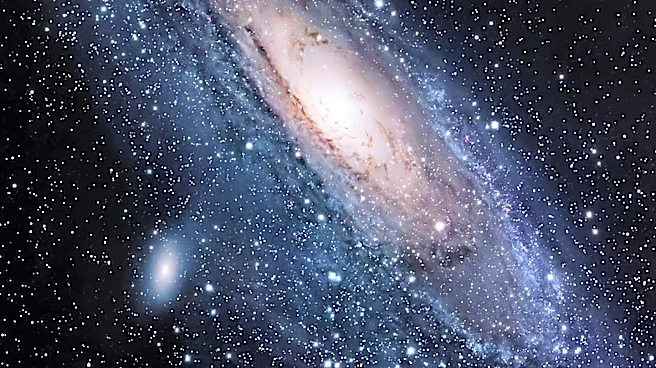
The Hubble Space Telescope has provided one of the most detailed observations of the Andromeda galaxy, revealing a significant decline in its star formation activity over the past 500 million years. The study, published in The Astrophysical Journal, indicates
that Andromeda, a giant spiral galaxy similar to the Milky Way, is naturally winding down from a previous period of intense star formation. This decline is primarily concentrated within a ring about 32,000 light-years from the galaxy's center. The research suggests that the galaxy is gradually reducing its star formation rather than abruptly running out of material. The study also explores the potential influence of the companion galaxy M32 on this slowdown, although evidence remains inconclusive.
Why It's Important?
Understanding the star formation patterns in Andromeda provides valuable insights into the evolution of large spiral galaxies, including the Milky Way. The findings contribute to the broader knowledge of galaxy formation and development, offering clues about the life cycles of galaxies. This research is crucial for astronomers studying the dynamics of galactic interactions and the factors influencing star formation. The data from Hubble, combined with future observations from NASA's Nancy Grace Roman Space Telescope, will enhance the understanding of galactic evolution and the role of companion galaxies in shaping these processes.
What's Next?
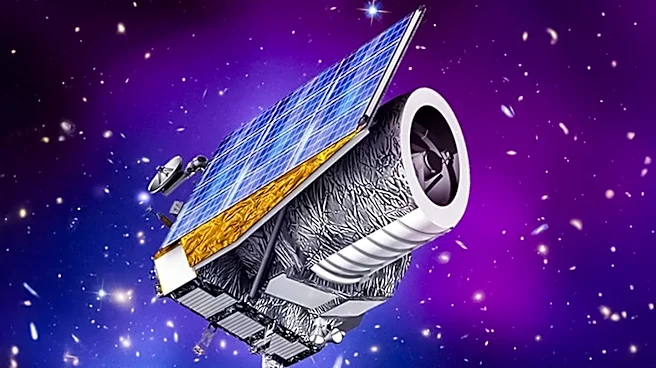
The upcoming launch of NASA's Nancy Grace Roman Space Telescope, with its larger field of view, will allow for more comprehensive surveys of the Andromeda galaxy and its surrounding halo. This will provide unprecedented detail and further insights into the galaxy's star formation history and evolution. Continued analysis of Hubble's archive and new data from Roman will help refine models of galactic development and interactions. The scientific community anticipates that these observations will lead to a deeper understanding of the mechanisms driving galaxy evolution and the potential future collision between Andromeda and the Milky Way.