







What's Happening?
Scientists at Mississippi State University (MSU) are actively monitoring for the potential arrival of the invasive Asian longhorned tick (Haemaphysalis longicornis) in Mississippi. While not yet confirmed in the state as of August 21, the tick has been
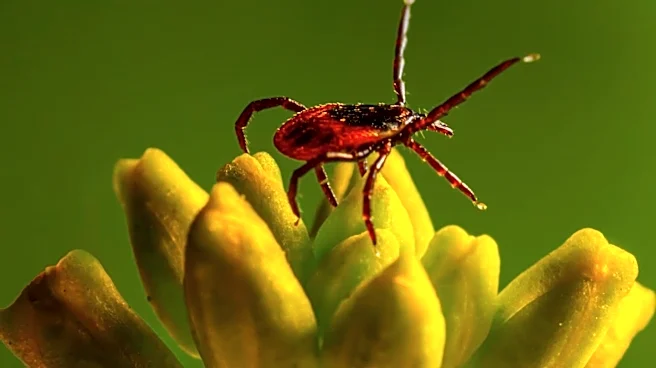
identified in neighboring states including Arkansas, Alabama, and Tennessee, and over 20 other U.S. states. This species, characterized by its small, reddish-brown appearance and ability to reproduce rapidly without mating, poses a significant threat to livestock. Female ticks can lay up to 2,000 eggs at a time, leading to massive infestations on animals. These ticks feed on a wide range of hosts, including livestock, birds, wildlife, and pets, and can appear in unusually large numbers. They prefer habitats with tall grass and high humidity, such as pastures, but have also been found in shaded residential lawns. The rapid reproduction rate and adaptability to new climates make them a serious concern for animal health officials.
Why It's Important?
The potential establishment of the Asian longhorned tick in Mississippi carries substantial implications for the state's agricultural sector, particularly livestock. The tick's ability to cause extreme blood loss due to massive infestations can lead to stress, reduced growth or production, and even death in animals, especially sheep and goats. This could result in significant economic losses for farmers and ranchers. Furthermore, these ticks are known to transmit various livestock diseases, including anaplasmosis, babesiosis, ehrlichiosis, theileriosis, and rickettsiosis. Of particular concern is bovine theileriosis (T. orientalis Ikeda), which has no vaccine or treatment and could severely impact the cattle industry. While currently not considered a significant vector for human diseases in the U.S., researchers are continuously monitoring this potential, as the tick is associated with human tick-borne diseases like Lyme disease, Ehrlichia, rickettsia, anaplasma, and Powassan virus in Asia. The presence of this tick could necessitate increased tick management efforts and costs for both livestock owners and the public.
What's Next?
Mississippi State University scientists are urging Mississippians to assist in detecting the Asian longhorned tick. Livestock owners are advised to implement robust tick control programs and maintain cut vegetation to reduce tick habitats. Pet owners should also ensure their animals are protected from ticks. For the general public, recommendations include using EPA-approved insect repellents, wearing light-colored clothing, tucking pant legs into socks or boots, and performing thorough body checks after spending time outdoors in tick-prone areas. If unusual ticks or abnormally large numbers of ticks are found, individuals are encouraged to submit samples for confirmation to the Mississippi State Department of Health’s Entomology and Vector Control Program. This involves placing ticks in a hard, leakproof container with isopropyl alcohol, along with collection details, and mailing them to the Mississippi Public Health Laboratory. Continued vigilance and reporting are crucial for early detection and management of this invasive species.
Beyond the Headlines
The arrival and spread of invasive species like the Asian longhorned tick highlight broader ecological and public health challenges. The tick's parthenogenetic reproduction (ability to reproduce without mating) allows for rapid population growth and dispersal, making containment difficult once established. This phenomenon underscores the interconnectedness of global ecosystems and the ease with which non-native species can be introduced and thrive in new environments, often with unforeseen consequences. The ongoing monitoring and research efforts by institutions like MSU are critical not only for immediate threat mitigation but also for understanding the long-term ecological impacts and potential evolutionary adaptations of these species in new habitats. The situation also emphasizes the importance of public engagement and citizen science in environmental surveillance, as early detection is key to effective management strategies for invasive pests and the diseases they may carry.