







What's Happening?
Life sciences laboratories are undergoing a significant transformation through AI-driven automation, moving from manual operations to integrated, intelligent environments. This evolution, highlighted in a recent Lab Manager webinar by Tina Yauger, emphasizes
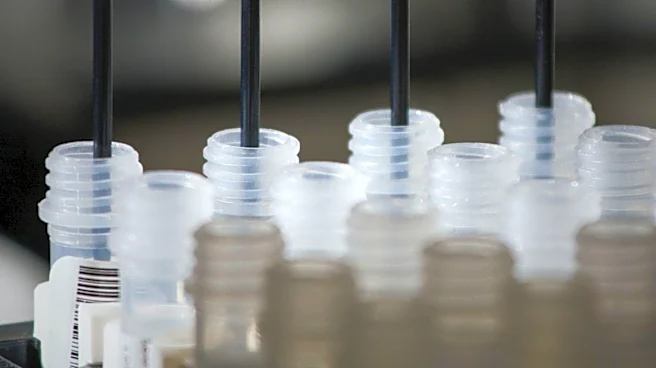
that AI is most effective when built upon stable, automated processes rather than being introduced to fix inconsistent manual workflows. Automation technologies, such as liquid-handling robots and automated sample storage systems, are being integrated with Laboratory Information Management Systems (LIMS) to reduce manual transcription and improve data integrity. AI further enhances these processes by analyzing historical data, predicting outcomes, and recommending experimental conditions, thereby accelerating research and development. However, experts stress that human expertise and oversight remain crucial, especially in regulated environments, to assess AI recommendations and ensure accountability for quality and compliance. The integration of AI is seen as augmenting human capabilities, allowing scientists to focus more on interpretation and decision-making.
Why It's Important?
The integration of AI and automation in U.S. life sciences laboratories holds significant implications for the healthcare and pharmaceutical industries. Faster workflows and reduced turnaround times for patient diagnostics can lead to quicker disease identification and treatment, directly impacting public health outcomes. For pharmaceutical companies, accelerated product development through AI-supported R&D can bring new medications to market more rapidly, addressing unmet medical needs and potentially reducing healthcare costs in the long run. The increased consistency and reduced manual errors contribute to higher data integrity and regulatory compliance, which are critical in highly regulated sectors. While the initial investment in upgrading legacy infrastructure and ensuring data quality can be substantial, the long-term benefits include enhanced efficiency, innovation, and a more robust scientific framework for experimentation. This shift allows scientists to engage in higher-value analytical and strategic work, potentially leading to groundbreaking discoveries and advancements in medical science.
What's Next?
The future of life sciences laboratories points towards increasingly intelligent and connected environments where AI and robotics collaborate to execute and optimize experiments. Predictive modeling will enable laboratories to anticipate operational needs and potential issues, such as equipment failures or changes in consumable demand, allowing for proactive maintenance and resource planning. Computer vision, an emerging AI application, will further enhance monitoring and analysis of microscopic samples and physical changes during processes. The concept of 'self-driving' or 'lights-out' laboratories, where AI works with robotics to conduct experiments with minimal human intervention, is on the horizon. However, human oversight will continue to be paramount, particularly in regulated contexts, as emphasized by FDA guidance. Organizations will need to prioritize establishing reliable processes and robust infrastructure before layering on advanced AI capabilities, ensuring that accountability for quality and compliance remains with qualified personnel. The ongoing development will focus on refining the balance between AI autonomy and human-in-the-loop oversight.
Beyond the Headlines
The ethical and legal dimensions of AI in life sciences are profound. As AI systems become more autonomous, questions of accountability for errors or unforeseen outcomes become more complex. The emphasis on human oversight, as highlighted by FDA guidance, underscores the current legal and ethical framework that places ultimate responsibility on human professionals. This development also signals a long-term shift in the skill sets required for laboratory professionals, moving from manual execution to data interpretation, AI management, and strategic decision-making. The potential for AI to reduce human bias in experimental design and data analysis is significant, but it also introduces the risk of algorithmic bias if training data is not diverse or representative. Furthermore, the increasing reliance on AI could create a digital divide, where laboratories with access to advanced AI infrastructure and expertise gain a significant competitive advantage, potentially exacerbating inequalities in research and development capabilities.