








What's Happening?
The U.S. is anticipating an increase in both headline and core inflation for October, with forecasts suggesting a 0.3% month-over-month rise for both metrics. This projection comes amidst early signs of an energy price spillover, which is expected to continue
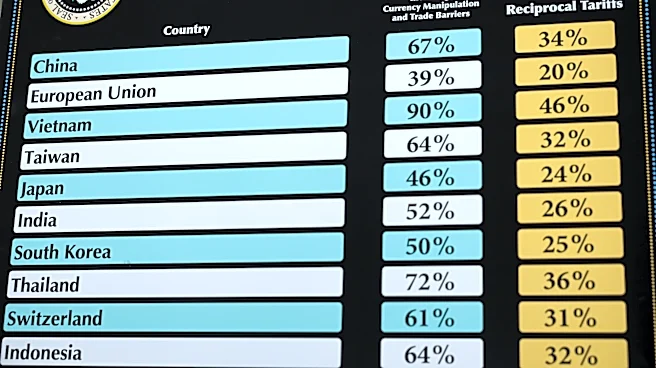
impacting inflation. Core goods prices have shown acceleration over the past three months, with notable pressures in imported categories such as apparel, footwear, toys, recreational goods, and IT equipment. Additionally, motor vehicle parts and equipment prices, influenced by tariff pressures, are contributing to increases in used car prices. Services inflation is not expected to provide significant relief, with housing prices continuing to tick upward. Core services excluding housing, often referred to as 'Super core,' have historically not declined on a year-over-year basis, further indicating persistent inflationary pressures. The absence of October 2025 data due to a government shutdown will prevent the release of year-over-year CPI data for October.
Why It's Important?
The anticipated rise in core inflation signals ongoing economic challenges for U.S. consumers and businesses. Accelerating core goods prices, particularly in imported categories, suggest that consumers may face higher costs for a wide range of products, from everyday apparel to electronics. The impact of tariff pressures on motor vehicle parts and equipment will likely continue to drive up the cost of vehicles, affecting both new and used car markets. The persistent increase in housing prices and the lack of relief from services inflation indicate that essential living costs will remain elevated. This sustained inflationary environment could erode purchasing power, impact household budgets, and potentially influence consumer spending patterns. For businesses, rising input costs, especially from energy and imported goods, could squeeze profit margins, leading to further price increases or adjustments in operational strategies.
What's Next?
Looking ahead, the Producer Price Index (PPI) data will be crucial in providing a clearer indication of inflation's trajectory. Forecasts suggest PPI rose 0.5% month-over-month in October, with headline PPI slightly higher due to the impact of high oil prices on freight costs. Freight has been identified as a significant pressure point, with PPI for deep sea transportation experiencing a record 37% year-over-year increase. Since PPI for freight is based on longer-term service contracts, a recent pullback in global spot rates for container shipping may not immediately translate into lower costs for businesses. This suggests that higher shipping costs are likely to continue, providing firms with a rationale to mark up prices. The substantial gap between the year-over-year pace of core PPI (excluding trade services) and core goods CPI indicates that a pass-through of these costs to consumer prices is imminent if businesses aim to maintain their profit margins.
Beyond the Headlines
The widening gap between core PPI for consumer goods and core goods CPI suggests a significant pipeline of price pressure that is yet to fully materialize for consumers. This indicates that businesses have been absorbing some of the increased production costs, but this trend is unsustainable in the long term. The imminent pass-through of these costs to consumers could lead to a broader and more entrenched inflationary environment. This situation also highlights the complex interplay between global supply chain dynamics, energy prices, and domestic consumer costs. The reliance on longer-term freight contracts means that even if global spot rates decline, the benefits may not be immediately felt by U.S. businesses or consumers, creating a lag in price adjustments. This could prolong the period of elevated inflation, impacting economic stability and potentially influencing future monetary policy decisions.