






What's Happening?
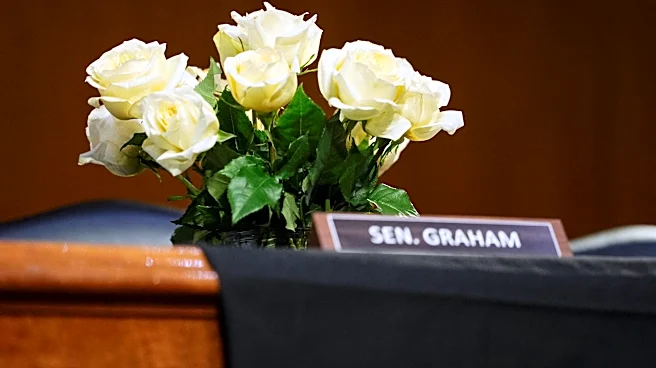
The Republican primary for South Carolina's U.S. Senate seat, vacated by the late Sen. Lindsey Graham, has attracted a large field of candidates. Notable figures in the race include U.S. Rep. Russell Fry, U.S. Sen. Darline Graham, U.S. Rep. Ralph Norman,
and former Gov. Mark Sanford. The primary is characterized by a compressed timeline, with early voting starting on August 5 and the primary election scheduled for August 11. Political experts emphasize the importance of name recognition and fundraising in this crowded field, as candidates must quickly establish campaign operations and reach voters. The primary is expected to have low voter turnout, making it crucial for candidates to mobilize their supporters effectively.
Why It's Important?
The outcome of this primary could significantly impact the political landscape in South Carolina and potentially influence the balance of power in the U.S. Senate. With high-profile candidates like Russell Fry and Darline Graham, who are associated with Trump conservatism, the primary could reflect broader national trends within the Republican Party. The ability to raise funds and gain media visibility will be critical, as candidates need to differentiate themselves in a crowded field. The primary's results could also set the stage for the general election, where the Republican nominee will face a Democratic challenger in a state that has been a Republican stronghold.
What's Next?
Given the large number of candidates, a runoff is likely if no candidate secures more than 50% of the vote in the primary. This would extend the campaign period and further compress the timeline leading up to the general election in November. Candidates will need to continue their fundraising efforts and voter outreach to maintain momentum. The primary's outcome will be closely watched by political analysts and could influence strategies in other states with similar political dynamics.