







What's Happening?
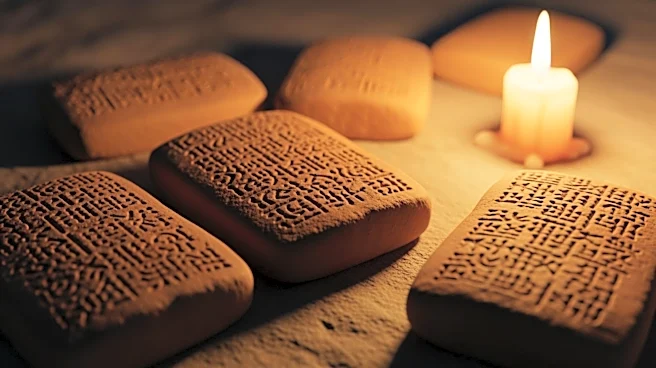
Researchers have deciphered a collection of 4,000-year-old clay tablets housed at the National Museum, revealing a wealth of information about ancient civilizations in the Middle East. These tablets, written in cuneiform, include texts on magical rituals,
royal records, and everyday administrative notes. The project, 'Hidden Treasures: The National Museum's Cuneiform Collection,' involved collaboration between the museum and the University of Copenhagen. Notably, the tablets include rare texts from the ancient Syrian city of Hama, detailing medical treatments and magical incantations. Among the findings is an anti-witchcraft ritual significant to Assyrian royal authority, and a regnal list tracing rulers back to mythical times, including references to King Gilgamesh.
Why It's Important?
The deciphering of these ancient tablets provides valuable insights into the socio-political and cultural dynamics of early civilizations. The discovery of texts related to magic and royal authority highlights the interplay between religion and governance in ancient societies. The regnal list, with its references to legendary figures like Gilgamesh, offers a rare glimpse into the historical narratives that shaped these cultures. This research enhances our understanding of the development of writing systems and their role in the administration and cultural expression of early societies. The project underscores the importance of preserving and studying ancient artifacts to uncover historical knowledge.