








What's Happening?
The USC Shoah Foundation has inaugurated a new office in Washington D.C., marked by a gala dinner featuring CNN anchor Wolf Blitzer. This expansion aims to leverage proximity to key partners, including Congress, the federal government, and foreign diplomats,
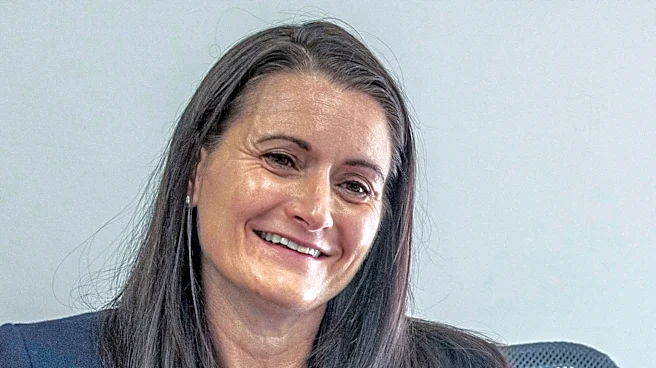
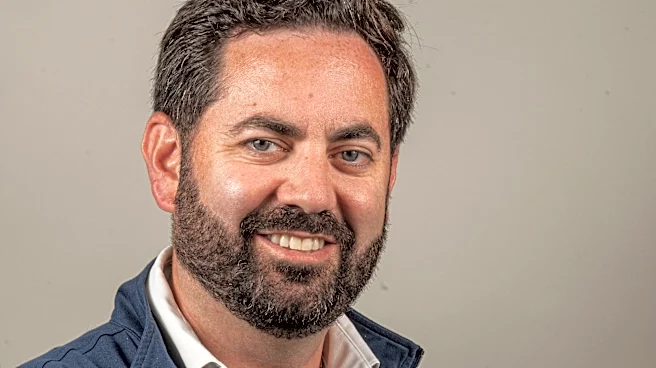
to more effectively address the global rise in antisemitism. Robert Williams, CEO of the Shoah Foundation, emphasized that the American Jewish community is no longer immune to the challenges faced in Europe, necessitating a stronger presence in the nation's capital. The new D.C. office is named the Goldrich Family Center, honoring Melinda Goldrich, the Shoah Foundation's chair, and her father, Holocaust survivor Jona Goldrich. The foundation plans to expand its collection of 60,000 survivor testimonies and make them publicly accessible online, building on a 2024 agreement with the National Library of Israel to make the collection available in Israel. Jenna Leventhal, COO of the Shoah Foundation, highlighted the organization's pivot to respond to the October 7, 2023, attacks on Israel, including collecting new testimonies and adapting long-term plans to the current environment of increasing antisemitism.
Why It's Important?
The establishment of the USC Shoah Foundation's Washington D.C. office signifies a critical strategic shift in the fight against antisemitism. By positioning itself in the heart of U.S. political power, the foundation aims to directly influence policymakers and leaders, ensuring that education about the Holocaust and contemporary antisemitism is integrated into broader societal structures. This move acknowledges that combating internet-driven antisemitism requires a coordinated effort beyond individual institutions. The accessibility of 60,000 survivor testimonies online will provide an invaluable educational resource, fostering a deeper understanding of the Holocaust and its lessons. This initiative is particularly vital in a period of heightened global tensions and a documented increase in antisemitic incidents, underscoring the need for robust educational and advocacy efforts to safeguard democratic values and prevent historical atrocities from being repeated. The foundation's focus on educating civil servants, political leaders, journalists, and others is crucial for developing a comprehensive and effective response to hate.
What's Next?
The USC Shoah Foundation plans to continue expanding its collection of survivor testimonies at an unprecedented rate. A key next step is to make its entire collection of 60,000 testimonies accessible to the public online, a goal the organization has been working towards for several years. This digital accessibility will significantly broaden the reach of their educational resources globally. The foundation will also continue to engage with its new D.C. partners, including Congress, federal government agencies, and foreign diplomats, to integrate antisemitism education into various sectors. This includes training for civil servants, political leaders, and journalists to ensure they are equipped to address and resist antisemitism. The organization will likely focus on leveraging its proximity to these decision-makers to advocate for policies and initiatives that promote tolerance and combat hate speech, particularly in the context of evolving online platforms and the rapid spread of misinformation.
Beyond the Headlines
The opening of the USC Shoah Foundation's D.C. office reflects a deeper societal concern about the erosion of historical memory and the resurgence of hate ideologies. Beyond its immediate mission of combating antisemitism, the foundation's work touches upon broader themes of civic education, the preservation of human rights, and the role of testimony in shaping collective consciousness. The emphasis on making survivor testimonies accessible online highlights the ethical imperative to learn from the past, especially as the generation of Holocaust survivors diminishes. This initiative also underscores the challenges of combating hate in the digital age, where misinformation and extremist narratives can spread rapidly. The foundation's efforts to engage with political and societal leaders suggest a recognition that addressing such complex issues requires a multi-faceted approach that transcends traditional educational settings, aiming to embed lessons of tolerance and remembrance into the fabric of democratic institutions and public discourse.