
What's Happening?
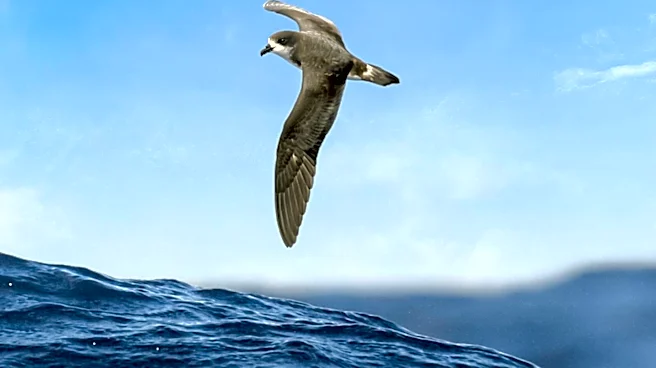
Chañaral Island in Chile, which was certified free of invasive rabbits in late 2017, has recently observed the natural nesting of rare Peruvian diving petrels. Seven years after the successful eradication
program, four active natural nests were found on the island in early 2024. These nests included two with chicks and one with a fledgling, marking a significant ecological recovery. The island had previously lost approximately 100,000 breeding pairs of these seabirds due to the presence of foxes and rabbits. The conservation efforts also involved a social attraction project initiated in September 2019, utilizing two solar speakers and artificial burrows to encourage the birds' return. This initiative builds upon earlier efforts, such as the rabbit removal program on Choros from 2013.
Why It's Important?
This ecological success story on Chañaral Island highlights the critical impact of invasive species on native wildlife and the potential for recovery through targeted conservation efforts. The return of the Peruvian diving petrels, a species that had significantly declined, demonstrates the effectiveness of long-term eradication programs. For the U.S., this case study offers valuable insights into managing invasive species in sensitive ecosystems, particularly in coastal and island environments. It underscores the importance of biodiversity conservation and the potential economic benefits derived from healthy ecosystems, such as eco-tourism and scientific research. The methods employed, including audio lures and artificial burrows, could inform similar projects aimed at restoring endangered bird populations in U.S. territories and protected areas, contributing to broader environmental policy and conservation strategies.
What's Next?
The continued monitoring of the Peruvian diving petrel population on Chañaral Island will be crucial to assess the long-term success of the eradication and attraction efforts. Conservationists will likely focus on ensuring the sustained absence of invasive species and the expansion of the seabird colony. This success could lead to the implementation of similar strategies in other regions facing ecological threats from invasive animals. Further research may explore the specific factors contributing to the rapid recovery and the potential for these methods to be scaled up or adapted for different species and environments. The Chilean government and conservation organizations may also seek to promote the island as a model for ecological restoration, potentially attracting international collaboration and funding for future projects.
Beyond the Headlines
The re-establishment of the Peruvian diving petrel population on Chañaral Island transcends a simple conservation win; it represents a profound shift in ecological balance and a testament to human intervention's positive potential. This event underscores the ethical responsibility to mitigate human-induced environmental damage and restore natural habitats. It also highlights the intricate web of life, where the removal of one invasive species can trigger a cascade of positive effects, allowing native species to thrive. The use of technology, such as audio lures, in conservation efforts points to an evolving approach to ecological restoration, blending scientific understanding with innovative tools. This success could inspire a re-evaluation of conservation priorities and funding allocations globally, emphasizing proactive measures and long-term commitment to ecological health.