






What's Happening?
A federal appeals court has reversed a lower court's decision, allowing a challenge against a South Carolina law that bans certain race-based concepts from being taught in classrooms to continue. The law, part of the state budget since 2021, prohibits
teaching eight specific concepts about race and history, such as the idea that one race is superior to another or that individuals are responsible for past atrocities due to their race. The challenge was initially dismissed by U.S. District Judge Sherri Lydon, who ruled that the plaintiffs did not meet the standards to sue. However, the appeals court has now ruled that two students who attempted to enroll in an Advanced Placement course have the right to sue, while two other students were removed from the lawsuit. The case, which includes the state NAACP as a plaintiff, will now return to the district court for further proceedings.
Why It's Important?
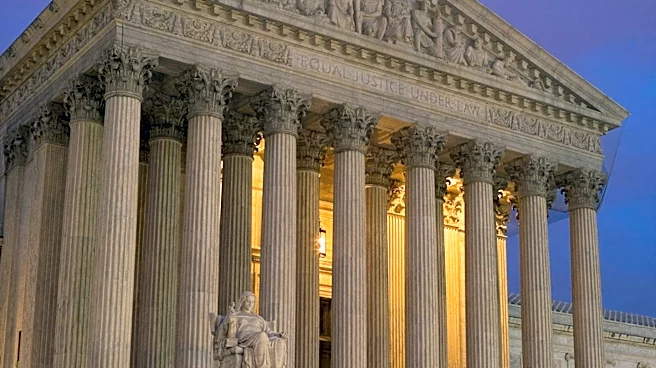
The decision to allow the lawsuit to proceed is significant as it addresses the broader issue of educational content and the rights of students and educators to access comprehensive and inclusive education. The law's critics argue that it stifles honest discussions about race and history, potentially violating First Amendment rights and the 14th Amendment's guarantees of due process and equal protection. The outcome of this case could have far-reaching implications for educational policies and the teaching of race-related topics in South Carolina and potentially influence similar debates in other states. The case also highlights ongoing tensions between state educational policies and federal constitutional rights.
What's Next?
The lawsuit will return to the district court, where further arguments will be made regarding the law's impact and its constitutionality. The plaintiffs, including students, educators, and the NAACP, will continue to argue for the law's suspension while the case is ongoing. The Department of Education maintains that its actions are consistent with the law, and the court will need to decide on the merits of the case. The outcome could lead to changes in how race and history are taught in South Carolina schools and potentially influence legislative actions in other states.