


What's Happening?
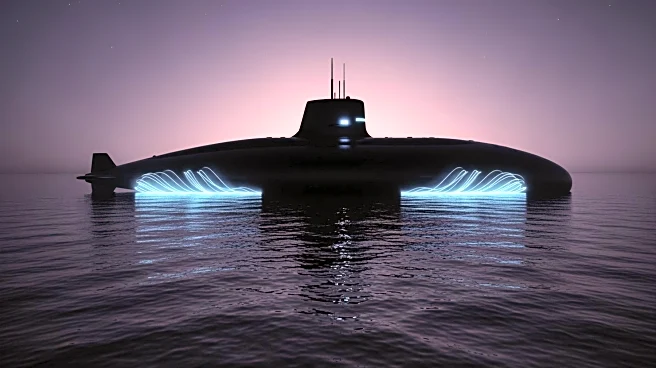
North Korea has revealed its first nuclear-powered ballistic missile submarine (SSBN) during a state media broadcast featuring leader Kim Jong-Un. This submarine represents a significant technological advancement for the Korean People's Navy (KPN), which
has traditionally operated conventionally powered submarines. The new SSBN is larger than any previous North Korean submarine, with a displacement of over 8,000 tonnes. It is equipped with strategic missile capabilities, potentially including nuclear-capable submarine-launched ballistic missiles (SLBMs) from the Pukguksong series. The submarine's design includes sail-mounted missile silos, a unique feature not seen in other SSBNs worldwide. This development is part of a broader modernization effort within the KPN, which has also seen the induction of new guided missile destroyers and other advanced naval assets.
Why It's Important?
The unveiling of North Korea's nuclear-powered submarine marks a significant step in the country's military capabilities, particularly in terms of its naval power and nuclear deterrence. This development could alter the strategic balance in the region, as it enhances North Korea's ability to conduct second-strike nuclear capabilities. The modernization of the KPN, including the addition of advanced destroyers and submarines, suggests a shift towards a more formidable maritime force. This could impact regional security dynamics, prompting neighboring countries and the international community to reassess their defense strategies and diplomatic approaches towards North Korea. The potential deployment of nuclear-capable SLBMs also raises concerns about nuclear proliferation and the stability of the Korean Peninsula.
What's Next?
The international community, particularly countries in the Asia-Pacific region, will likely monitor North Korea's naval developments closely. There may be increased diplomatic efforts to address the potential threats posed by North Korea's enhanced military capabilities. Additionally, regional powers such as South Korea, Japan, and the United States might consider bolstering their own military defenses and strategic alliances in response. The situation could also lead to renewed discussions on arms control and non-proliferation efforts aimed at curbing North Korea's nuclear ambitions. The KPN's continued modernization efforts will be a key factor in shaping future security policies in the region.