
What's Happening?
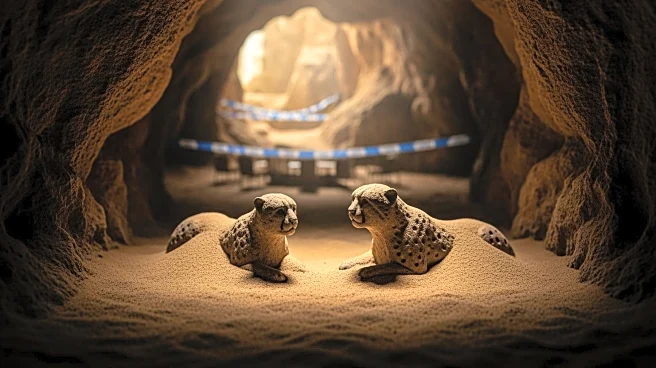
Researchers have uncovered the mummified remains of cheetahs in caves located in northern Saudi Arabia, near the city of Arar. The discovery includes seven mummified cheetahs and the bones of 54 others,
with ages ranging from 130 to over 1,800 years old. The mummification process, which prevents decay, is typically associated with Egyptian mummies but can also occur naturally in environments like desert sands. The dry conditions and stable temperatures of the caves likely contributed to the preservation of these remains. This finding is unprecedented, as it provides intact evidence of cheetahs that once inhabited this region. The study, published in the journal Communications Earth and Environment, suggests that the caves might have served as a denning site for cheetah mothers and their young.
Why It's Important?
The discovery of these mummified cheetahs is significant as it sheds light on the historical distribution of cheetahs, which once roamed across much of Africa and parts of Asia. Today, cheetahs occupy only 9% of their former range, largely due to habitat loss, hunting, and prey scarcity. The genetic analysis of the mummified remains reveals similarities with modern cheetahs from Asia and northwest Africa, providing valuable data for potential reintroduction efforts. Understanding the historical range and genetic diversity of cheetahs can inform conservation strategies aimed at restoring populations in areas where they have disappeared.
What's Next?
The findings could lead to further research into the historical habitats and behaviors of cheetahs, potentially guiding conservationists in reintroduction programs. The genetic information obtained from the mummified remains may help identify suitable habitats and populations for reintroduction efforts. Additionally, the study may prompt further exploration of other potential sites in the region that could yield more insights into the historical presence of cheetahs and other large mammals.
Beyond the Headlines
This discovery highlights the broader implications of natural mummification in understanding extinct or endangered species. It underscores the importance of preserving archaeological sites that can offer insights into past ecosystems and biodiversity. The study also raises questions about the historical interactions between humans and wildlife in the region, as well as the environmental changes that have occurred over the centuries.