

What's Happening?
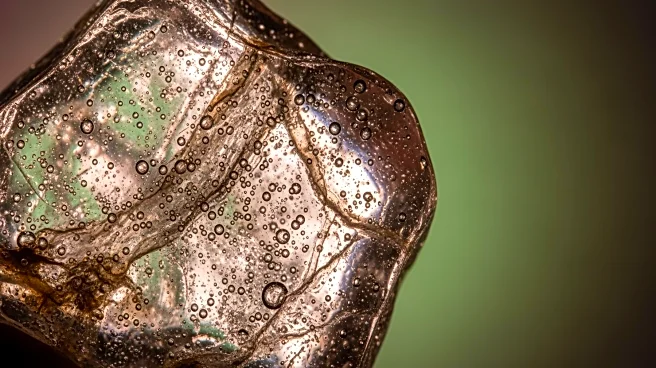
A team of researchers has successfully analyzed air bubbles trapped in 1.4-billion-year-old salt crystals from northern Ontario, Canada. This groundbreaking study provides the first direct measurements of atmospheric oxygen and carbon dioxide levels from the Mesoproterozoic
era, a period often referred to as the 'Boring Billion' due to its perceived lack of significant evolutionary change. The findings, published in the Proceedings of the National Academy of Sciences, reveal that the oxygen levels during this era were about 3.7% of modern levels, which is higher than previously estimated. Additionally, carbon dioxide levels were found to be ten times higher than preindustrial levels, suggesting a warmer and more stable climate than previously assumed.
Why It's Important?
This discovery is significant as it challenges previous assumptions about the Mesoproterozoic era's climate and atmospheric conditions. The higher-than-expected oxygen levels and elevated carbon dioxide concentrations suggest that the climate during this period was milder and more stable than previously thought. This has implications for understanding the evolution of life on Earth, as these conditions may have supported the development and complexity of algal life, which played a crucial role in oxygen production. The study provides a more accurate picture of Earth's ancient atmosphere, offering insights into how early life forms might have adapted to these conditions.
What's Next?
The research opens new avenues for further exploration into Earth's ancient atmospheric conditions and their impact on early life. Scientists may continue to analyze similar ancient samples to refine their understanding of the Mesoproterozoic era and other periods in Earth's history. The findings could also influence current models of climate change by providing a historical context for atmospheric shifts. Future studies might focus on the role of algae and other early life forms in shaping the planet's atmosphere and climate.
Beyond the Headlines
The study highlights the challenges and complexities involved in measuring ancient gases, as halite crystals contain both air bubbles and brine, which can affect gas behavior. This research underscores the importance of technological advancements in extracting and analyzing ancient samples, which can lead to more accurate reconstructions of Earth's past environments. The findings also prompt a reevaluation of the 'Boring Billion' as a period of significant atmospheric and climatic change, potentially altering our understanding of Earth's evolutionary history.