




What's Happening?
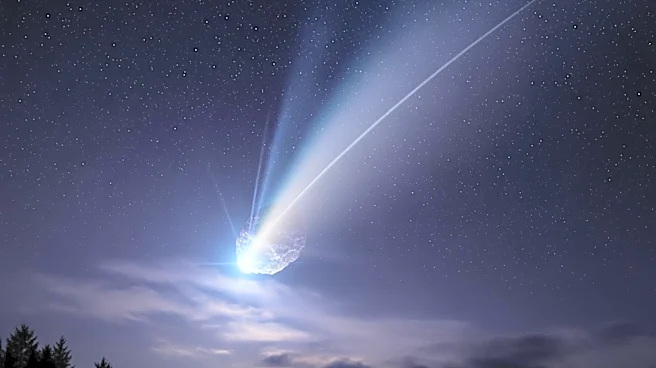
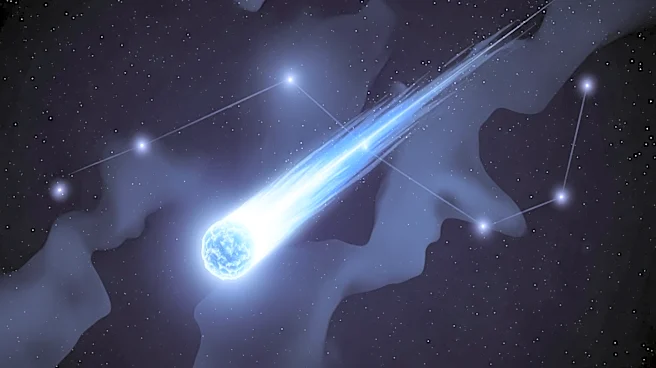
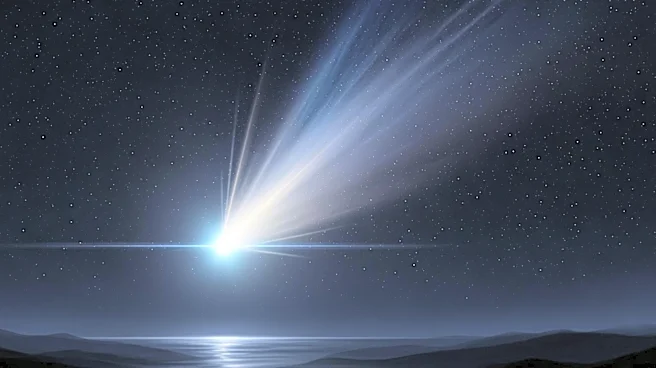
Comet C/2025 R3 (PanSTARRS) has become a notable celestial event as it brightens to a magnitude visible to the naked eye. Currently, the comet is best observed in the early morning hours before dawn, as it moves through the Great Square of Pegasus. Astronomers
have recorded the comet at mid-5th magnitude, making it visible without telescopic aid, although binoculars or a small telescope can enhance the viewing experience. The comet is positioned near the star Markab, the alpha star of Pegasus, providing a useful reference point for observers. As the comet continues its trajectory, it is expected to reach up to 4th magnitude, although it is gradually sinking towards the horizon, which may make it more challenging to observe in the coming days.
Why It's Important?
The visibility of Comet C/2025 R3 (PanSTARRS) presents a unique opportunity for both amateur and professional astronomers to observe a celestial body that is typically not visible to the naked eye. Such events can spark public interest in astronomy and provide educational opportunities for schools and science enthusiasts. The comet's appearance also allows scientists to study its composition and behavior, contributing to our understanding of cometary dynamics and the solar system. For the general public, this event offers a chance to engage with the night sky and appreciate the natural wonders beyond our planet.
What's Next?
As Comet C/2025 R3 (PanSTARRS) continues its journey, it will become increasingly difficult to observe due to its descent towards the horizon. Observers are encouraged to take advantage of the current visibility conditions, ideally using binoculars or telescopes for a clearer view. Astronomers will continue to monitor the comet's brightness and trajectory, providing updates on optimal viewing times and locations. This event may also inspire future astronomical observations and research, as well as public interest in upcoming celestial phenomena.