







What's Happening?
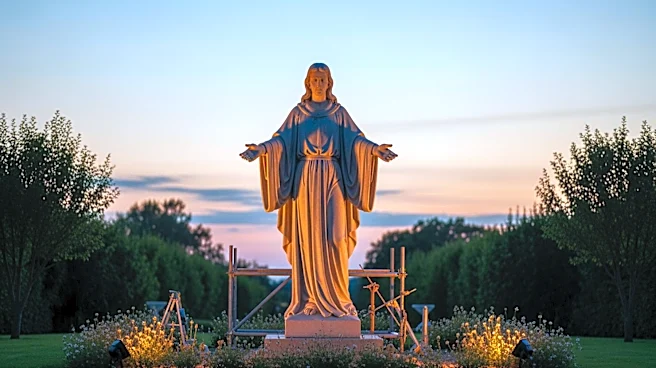
Italian peacekeepers have replaced a statue of Jesus Christ in the village of Debel, southern Lebanon, after it was vandalized by Israeli soldiers. The incident, which involved an Israeli soldier damaging the statue with a hammer or ax, sparked outrage
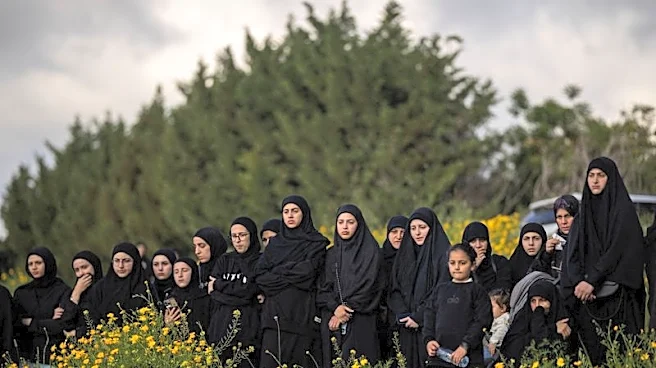
among Christian communities globally. In response, Israel issued an apology and detained two soldiers, with six others being questioned. The replacement of the statue was facilitated by Italian peacekeepers who escorted Archbishop Paolo Borgia, the Vatican's ambassador to Lebanon, to the village. The village of Debel, predominantly Christian, has been isolated due to ongoing conflict between Israel and Hezbollah. The new statue was placed in a garden where the original stood, and a crucifix donated by Israel was given to the local parish.
Why It's Important?
The restoration of the statue and the apology from Israel are significant in easing tensions in a region fraught with conflict. The gesture by Italian peacekeepers and the Vatican underscores the importance of international cooperation in peacekeeping efforts. The incident highlights the delicate balance of religious and cultural sensitivities in conflict zones. For the residents of Debel, the replacement of the statue symbolizes hope and forgiveness amidst ongoing hostilities. The broader implications include potential diplomatic repercussions and the role of international peacekeepers in mediating cultural and religious disputes.
What's Next?
The situation in Debel remains tense, with the village still under the shadow of conflict. The Israeli apology and the peacekeepers' actions may pave the way for further diplomatic engagements to address the broader conflict between Israel and Hezbollah. The international community, particularly those involved in peacekeeping, will likely continue to monitor the situation closely. The focus will be on ensuring that such incidents do not recur and that cultural and religious sites are respected in conflict zones.