
What's Happening?
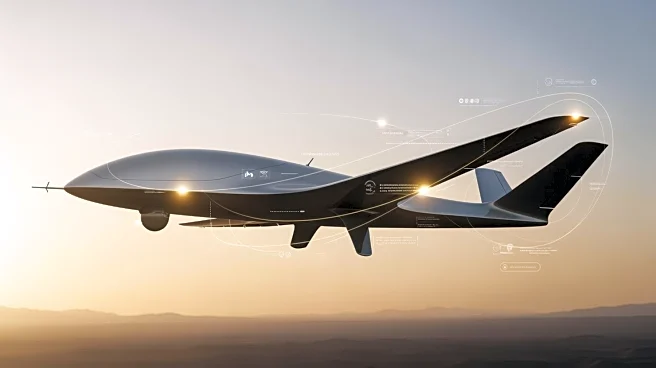
General Atomics Aeronautical Systems (GA-ASI) has successfully conducted a mission autonomy test flight using its MQ-20 Avenger drone, equipped with the latest government reference autonomy software. This
test demonstrated the drone's ability to make independent decisions using onboard sensors, allowing it to execute complex tasks without human intervention. The mission began with planning through a Human-Machine Interface, followed by loading the plan onto the MQ-20 Avenger. Once airborne, the drone's systems were verified for their ability to adapt to evolving mission requirements. The MQ-20 maintained compliance with designated Keep-Out and Keep-In Zones, avoiding restricted airspace. During the flight, the drone used an Infrared Search and Track (IRST) sensor to passively range a live target aircraft, establish a track, calculate an intercept solution, and simulate a weapon firing, which indicated a successful target destruction if real. The test also included directing the MQ-20 along a predetermined path and successfully avoiding all keep-out zones.
Why It's Important?
This successful test flight marks a significant advancement in autonomous military technology, showcasing the potential for drones to operate independently in complex environments. The ability of the MQ-20 Avenger to execute tasks without human intervention could revolutionize military operations, reducing the need for human pilots in dangerous situations and potentially lowering operational costs. This development is crucial for the U.S. military's strategic capabilities, as it enhances the effectiveness and efficiency of unmanned aerial systems. The integration of advanced autonomy software could lead to more sophisticated and reliable drone operations, providing the U.S. military with a technological edge in defense scenarios.
What's Next?
Following this successful demonstration, further tests and evaluations are likely to continue to refine the autonomy software and expand its capabilities. The U.S. military and GA-ASI may explore additional applications for the MQ-20 Avenger, potentially integrating it into broader military strategies and operations. Future developments could include collaborations with other defense contractors to enhance the drone's capabilities and ensure its compatibility with existing military systems. The ongoing evolution of autonomous technology in military applications will likely prompt discussions on regulatory and ethical considerations, as well as the potential impact on military personnel roles.