



What's Happening?
The Confederate ironclad CSS Manassas, the first ironclad warship used in the Civil War, was known by at least half a dozen distinct nicknames during its operational period. Originally conceived as a privateer to breach the Union blockade, the vessel
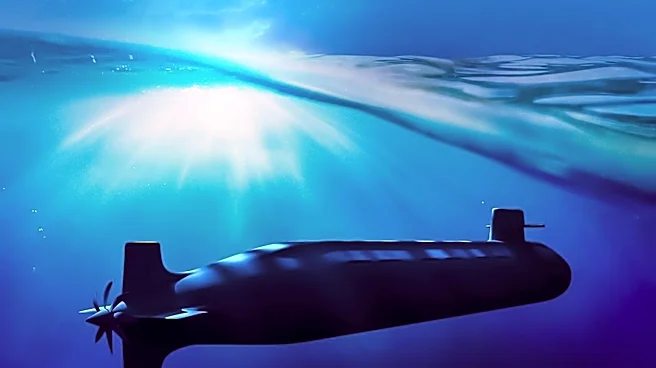
was seized by Confederate naval leadership in New Orleans in late 1861. It saw action at the Battle of the Head of Passes in October 1861 and was ultimately destroyed on April 24, 1862, during the Battle of Forts Jackson and St. Philip. The ship's unique design, being relatively small, having a convex hull that sat low in the water, and featuring a single gunport and an iron ram, contributed to many of its monikers. Nicknames emerged from three main categories: physical descriptions, its mission, and its name. For instance, its concave shell led to the popular nickname 'turtle,' while its ramming capability inspired names like 'the ram' and 'the battering ram.' Federal officers, including Rear Admiral David Farragut, frequently referred to it simply as 'the ram.'
Why It's Important?
The proliferation of nicknames for the CSS Manassas offers a unique insight into how Civil War participants, both Union and Confederate, perceived and coped with the stresses of naval combat and the introduction of new military technology. The various monikers reflect the ship's distinctive appearance and its novel role as an ironclad ram, marking a significant transition in naval warfare from wooden sailing vessels to ironclad steam-powered ships. The use of descriptive nicknames like 'turtle' or 'nondescript' highlights the unfamiliarity and sometimes awe inspired by this new class of warship. Furthermore, the adoption of 'Bull Run' as an alternative name, linking it to a major land battle, underscores the interconnectedness of land and sea campaigns and the psychological impact of key engagements. Understanding these nicknames helps Civil War enthusiasts and historians grasp the contemporary perspectives and the evolving nature of military terminology during a period of rapid technological change.
What's Next?
While the CSS Manassas was destroyed in 1862, its legacy as the first Confederate ironclad and the subject of numerous nicknames continues to be studied by historians. Future research may delve deeper into the origins and prevalence of these nicknames, potentially uncovering more personal accounts or official documents that shed further light on their usage and significance. The study of such historical details contributes to a richer understanding of the Civil War era, particularly the psychological and cultural aspects of warfare. The Manassas's role in the transition to ironclad ships also serves as a foundational case study for military strategists and naval architects examining the impact of technological innovation on combat. Continued analysis of primary sources, such as memoirs, letters, and official reports, will likely refine our understanding of this pivotal vessel and its place in Civil War history.
Beyond the Headlines
The phenomenon of assigning multiple nicknames to a significant military asset like the CSS Manassas extends beyond mere historical curiosity; it reflects a deeper human tendency to categorize, understand, and even humanize new and impactful technologies. In a period of intense conflict and rapid innovation, these nicknames served as a form of collective sense-making, allowing individuals to grapple with the unfamiliar and to communicate complex ideas in a more accessible way. The shift from traditional wooden ships to ironclads represented a paradigm change in naval warfare, and the diverse names given to the Manassas illustrate the initial uncertainty and subsequent adaptation to this new reality. This linguistic evolution mirrors how societies often respond to disruptive technologies, creating new vocabularies to describe and integrate them into their understanding of the world. The Manassas, through its many names, thus becomes a symbol of technological transition and the human response to it during a transformative period in U.S. history.