



What's Happening?
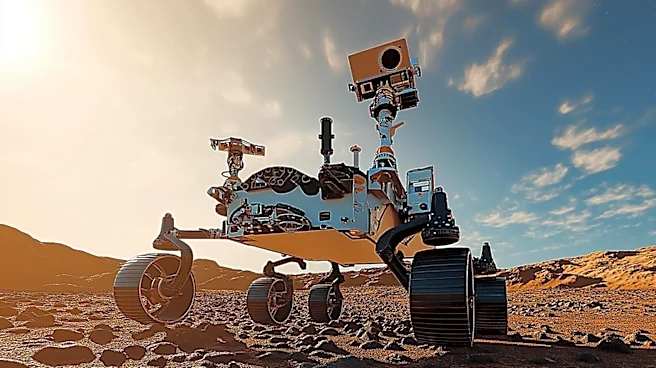
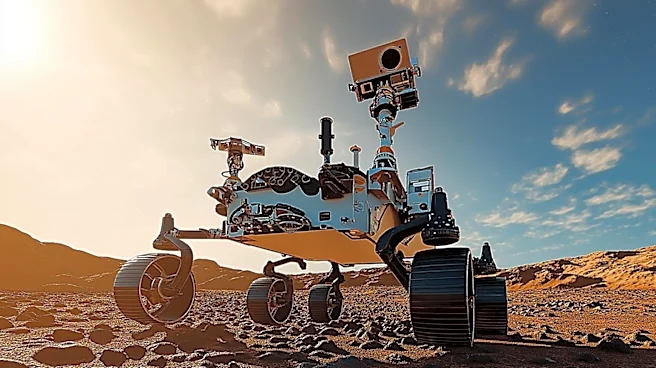
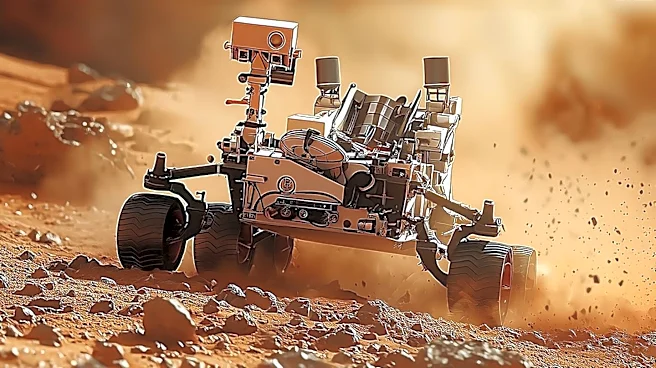
A photograph taken by NASA's Curiosity rover on Mars has led to speculation about the presence of an unexploded alien weapon on the planet. UFO researcher Scott C. Waring claims the image shows a missile-like object, suggesting a past extraterrestrial
conflict. However, NASA has not classified the formation as anything other than a natural rock formation. The agency maintains there is no evidence of life on Mars, and previous similar claims have been attributed to pareidolia, where humans perceive familiar patterns in random formations.
Why It's Important?
The speculation surrounding the Mars image highlights the ongoing public interest in the possibility of extraterrestrial life and artifacts. While NASA's scientific assessments do not support these claims, the discussions reflect a broader cultural fascination with the unknown and the potential for life beyond Earth. This interest can drive public support for space exploration and funding for scientific research, even as it underscores the need for critical evaluation of evidence and claims.
Beyond the Headlines
The phenomenon of pareidolia, where people see recognizable shapes in random patterns, plays a significant role in the interpretation of images from Mars and other celestial bodies. This psychological effect can lead to widespread speculation and misinformation, emphasizing the importance of scientific rigor and skepticism in evaluating extraterrestrial claims. The cultural impact of such speculations can influence public perceptions of space exploration and the search for life beyond Earth.