
What's Happening?
McInnis Canyons National Conservation Area in western Colorado, near the Utah border, provides a range of outdoor activities and natural attractions. The area, managed by the Bureau of Land Management,
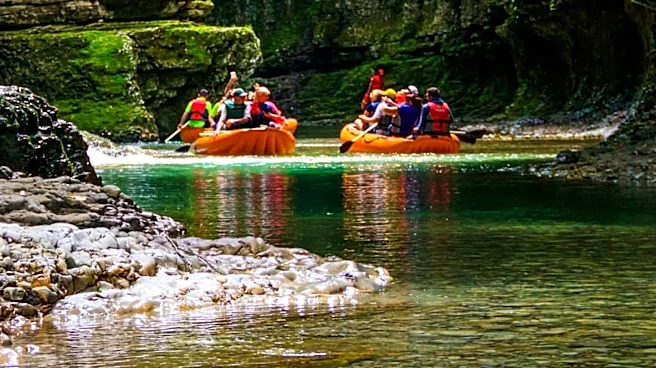
includes Rabbit Valley, known for motorcycle and ATV riding, camping, and mountain biking. Camping in Rabbit Valley's Fluffle loop requires reservations through Recreation.gov and is limited to seven nights per month. The conservation area also features the Rabbit Valley Trail Through Time, a 1.5-mile loop at a working fossil quarry with 140-million-year-old dinosaur remains. Additionally, it encompasses the Black Ridge Canyons Wilderness, which boasts over 75,000 acres and the second-largest concentration of natural arches in North America, including the Rattlesnake Arches. The 142-mile Kokopelli trail, extending to Moab, Utah, and the Ruby-Horsethief stretch of the Colorado River, offering 25 miles of flat water, are also prominent features.
Why It's Important?
The McInnis Canyons National Conservation Area is significant for its blend of recreational opportunities and natural preservation. Its designation as a National Conservation Area highlights the U.S. commitment to protecting unique geological formations and paleontological sites, such as the dinosaur remains at the Rabbit Valley Trail Through Time. The area's diverse landscape supports various outdoor activities, contributing to local tourism and recreation economies. The presence of extensive trail systems like the Kokopelli trail and the Ruby-Horsethief stretch of the Colorado River attracts outdoor enthusiasts, potentially boosting local businesses through visitor spending on lodging, food, and gear. The conservation efforts also ensure the long-term ecological health of the region, preserving habitats and geological wonders for future generations.
What's Next?
The Bureau of Land Management will continue to manage camping reservations through Recreation.gov for sites like the Fluffle loop in Rabbit Valley. Ongoing maintenance and development of trails, such as the Kokopelli trail and those within Rabbit Valley, are expected to support continued recreational use. The conservation area's equestrian campground will maintain its seasonal closure from February through April for livestock operations. Future efforts may focus on further promoting the area's unique geological and paleontological attractions, potentially drawing more visitors interested in its natural history. Continued monitoring and preservation of the Black Ridge Canyons Wilderness and its natural arches will also be a priority.
Beyond the Headlines
The McInnis Canyons National Conservation Area represents a broader trend in U.S. land management, balancing public access for recreation with the imperative of environmental and historical preservation. The area's rich paleontological history, evidenced by the 140-million-year-old dinosaur fossils, underscores the importance of these lands for scientific research and education. The renaming of the area for Representative Scott McInnis in 2005 reflects the political processes involved in establishing and recognizing such conservation efforts. The diverse range of activities, from motorized recreation to quiet river trips, highlights the complex challenge of managing multiple user groups within a single protected area, requiring careful planning to minimize conflicts and ensure sustainable use.