



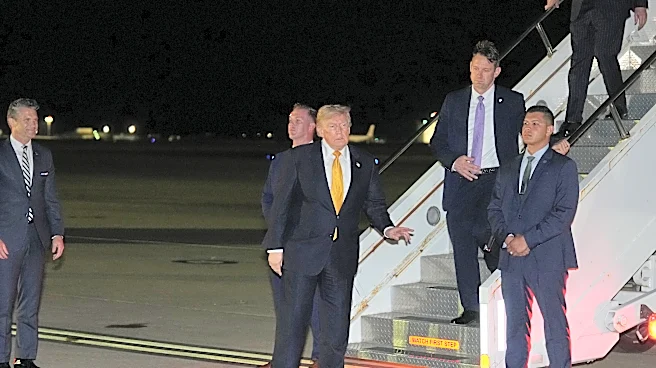
What's Happening?
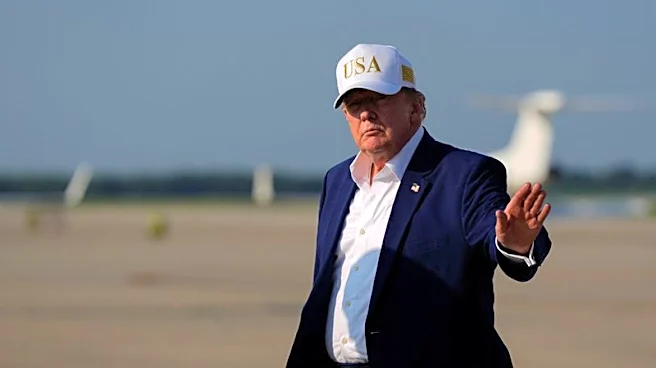
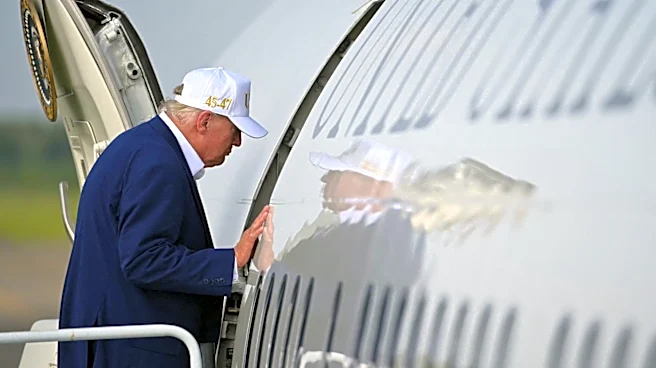
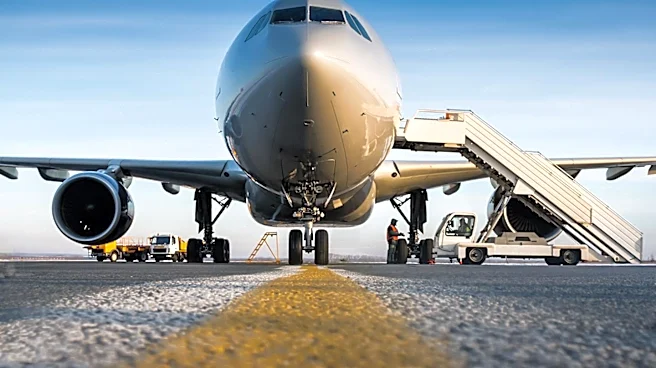
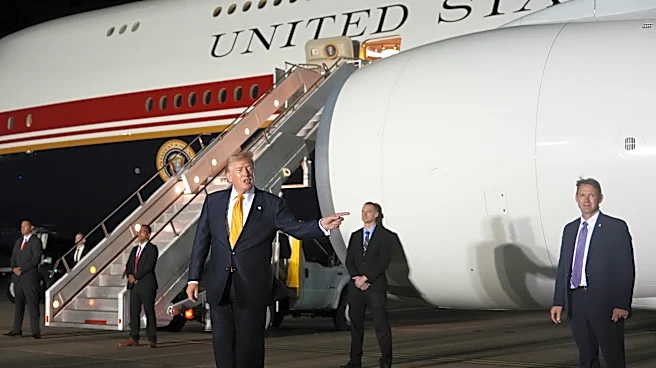
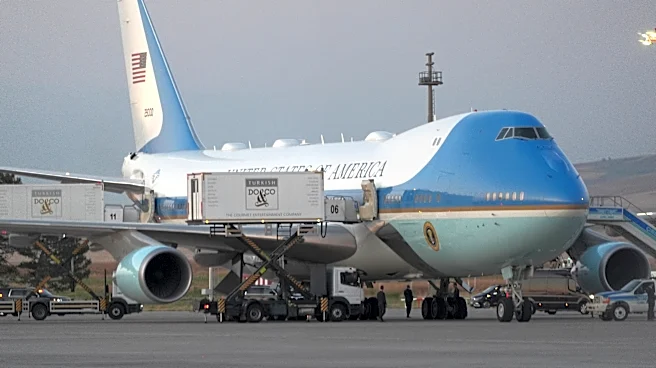
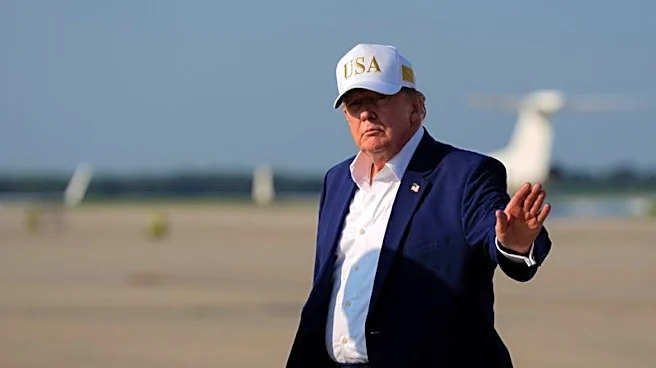
In a covert operation, President Trump was secretly moved from Air Force One to a different aircraft during a visit to Turkey, following a credible threat from Iran. The original Air Force One served as a decoy, carrying Secretary of State Marco Rubio,
Treasury Secretary Scott Bessent, and other top aides, along with the traveling press corps. The operation was executed without informing all passengers of the threat, raising questions about the decision-making process and the safety of those on board. The White House has not disclosed how it determined who would remain on the decoy flight, nor has it provided a complete passenger list.
Why It's Important?
This incident highlights the complexities and risks involved in ensuring the safety of high-profile government officials during international travel. The use of a decoy plane underscores the level of threat perceived and the lengths to which security measures are taken to protect the President. The lack of transparency regarding the decision-making process and the potential risks to those on the decoy flight could lead to scrutiny and calls for clearer protocols. This event also illustrates the ongoing geopolitical tensions and the impact of international threats on U.S. diplomatic operations.
What's Next?
The White House may face pressure to clarify the protocols used in such high-stakes situations and to provide more transparency about the decision-making process. There could be calls for an investigation into the security measures and the communication with those involved in the decoy operation. Additionally, this incident may prompt a review of current security practices for presidential travel, potentially leading to changes in how threats are assessed and managed in the future.