

What's Happening?
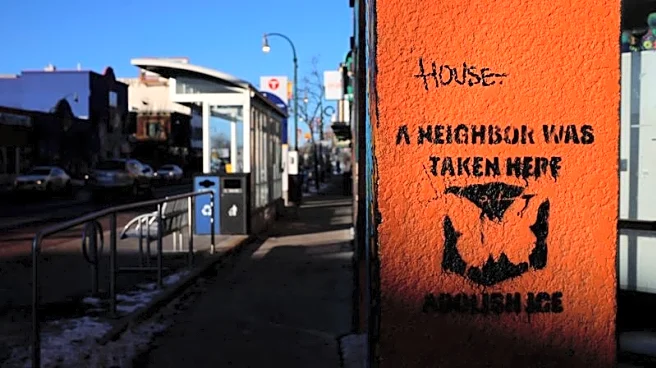
Construction workers in Minneapolis have called on local developers to take a stand against U.S. Immigration and Customs Enforcement (ICE) and to provide protections for their crews. This call to action was made during a demonstration on Friday, where
workers urged developers to demand that ICE leave Minnesota. In a related protest on Nicollet Mall in downtown Minneapolis, participants asked corporate businesses to cease what they describe as cooperation with immigration enforcement. The workers' demands highlight ongoing tensions between labor groups and immigration authorities, as well as concerns over the safety and security of immigrant workers in the construction industry.
Why It's Important?
The actions of the Minneapolis construction workers underscore a significant issue within the U.S. labor market, particularly concerning immigrant workers' rights and safety. By urging developers to oppose ICE, the workers are highlighting the potential risks and vulnerabilities faced by immigrant laborers, who are often integral to the construction industry. This situation could influence public policy discussions around immigration enforcement and labor rights, potentially affecting how businesses interact with federal agencies. The outcome of these protests may also impact the relationship between developers and their workforce, as well as the broader community's perception of immigration enforcement practices.
What's Next?
The response from developers and corporate businesses to the construction workers' demands will be crucial in determining the next steps. If developers choose to support the workers' call, it could lead to increased pressure on ICE and potentially influence policy changes at the local or state level. Conversely, if developers and businesses do not respond favorably, it may lead to further protests and heightened tensions between labor groups and immigration authorities. The situation also presents an opportunity for political leaders to engage in dialogue about immigration policies and labor rights, potentially leading to legislative proposals aimed at protecting immigrant workers.