




What's Happening?
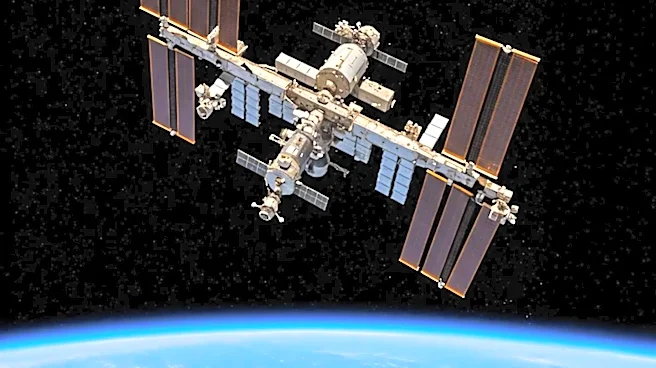
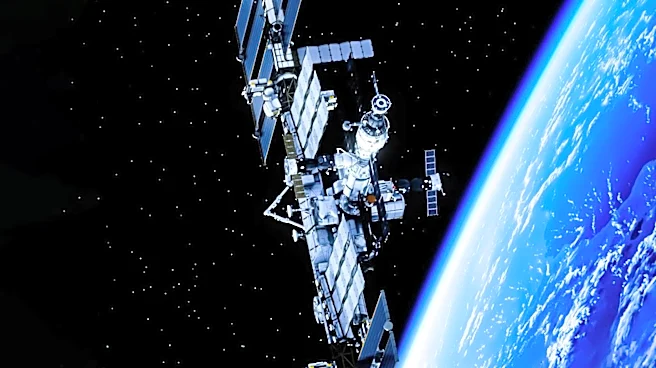
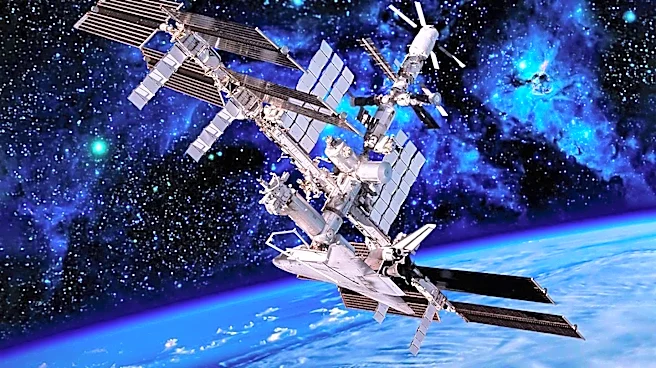
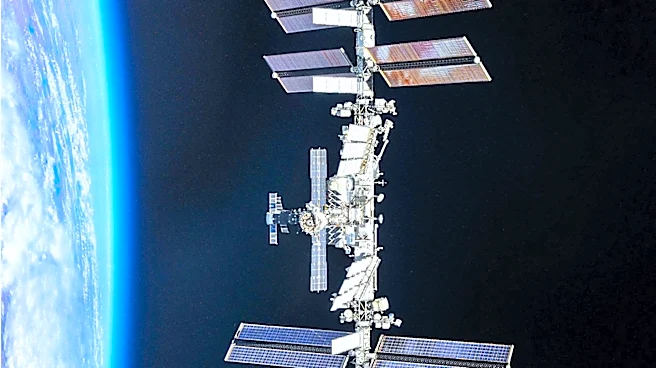
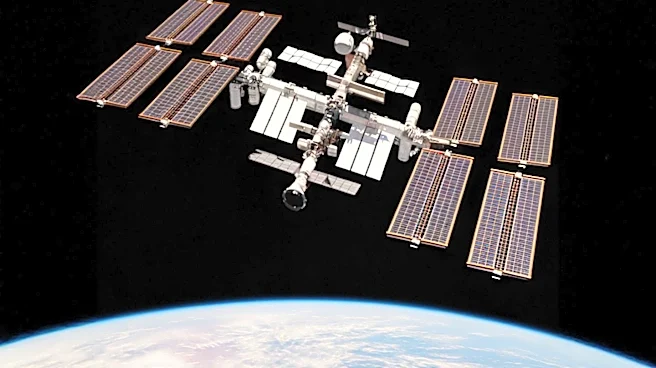
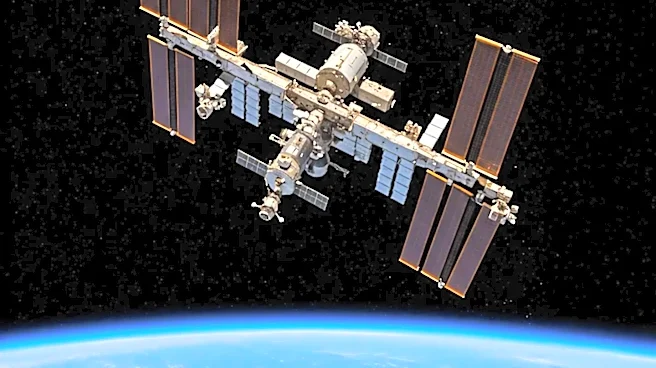
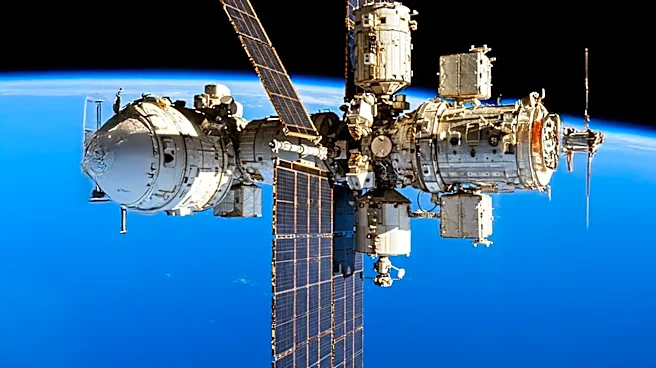
NASA has assigned astronaut Deniz Burnham to her first mission to the International Space Station (ISS) as an Expedition 76 flight engineer. Burnham will launch aboard the Roscosmos Soyuz MS-30 spacecraft alongside cosmonauts Dmitri Petelin and Konstantin
Borisov. The mission is scheduled for March 2027, with the crew expected to spend approximately seven months aboard the ISS. During her time on the station, Burnham will conduct scientific investigations and technology demonstrations aimed at preparing for future exploration missions to the Moon and Mars. Burnham, who was selected as a NASA astronaut in 2021, has a background in chemical and mechanical engineering and has extensive experience in the energy industry and the U.S. Navy Reserves.
Why It's Important?
Burnham's assignment to the ISS is a significant step in NASA's ongoing efforts to advance human spaceflight and scientific research in low Earth orbit. Her mission will contribute to the understanding of long-duration space missions, which are crucial for future endeavors to the Moon and Mars under NASA's Artemis program. The inclusion of diverse and skilled astronauts like Burnham enhances the agency's ability to conduct complex scientific experiments and technology tests that benefit both space exploration and life on Earth. This mission also underscores the importance of international collaboration in space exploration, as Burnham will work alongside Russian cosmonauts.
What's Next?
As Burnham prepares for her mission, NASA will continue to focus on training and equipping her with the necessary skills for her role as a flight engineer. The upcoming mission will involve extensive collaboration with international partners, and the results of the scientific experiments conducted aboard the ISS will be closely monitored. The mission's success will provide valuable insights for future long-duration missions, particularly those targeting the Moon and Mars. NASA's continued investment in human spaceflight capabilities will play a pivotal role in shaping the future of space exploration.