



What's Happening?
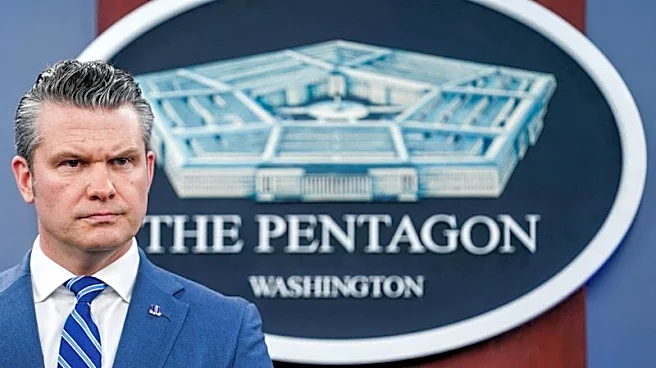
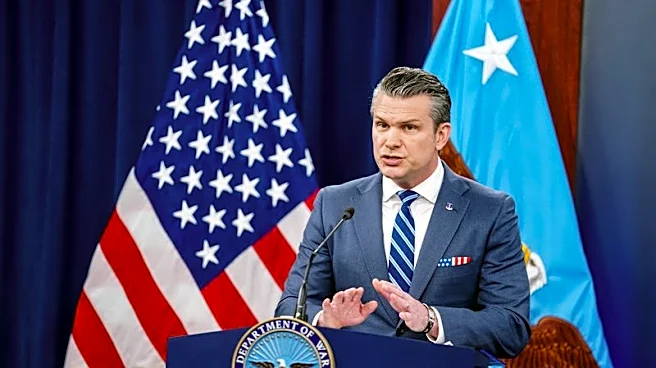
On April 16, 2026, Secretary of War Pete Hegseth led a Pentagon prayer service using an adapted version of a fictitious Bible verse from Quentin Tarantino's Pulp Fiction. The prayer, known as 'CSAR 25:17', was recited before a rescue mission in Iran and
included language similar to the movie's script. Hegseth acknowledged the famous scene from Pulp Fiction, where Samuel L. Jackson's character delivers the supposed Bible verse. The real Ezekiel 25:17 verse from the King James Bible was altered for dramatic effect in the film, and Hegseth's prayer mirrored this adaptation.
Why It's Important?
The use of a fictional verse in a Pentagon prayer service raises questions about the blending of pop culture and official government settings. Critics argue that it reflects a broader trend in the current administration of using religious imagery for political purposes without deep theological understanding. The incident has sparked debate about the appropriateness of using entertainment references in solemn ceremonies, especially in the Pentagon, a symbol of U.S. military power. It highlights the importance of maintaining seriousness in official settings.
What's Next?
The Department of Defense has not issued an official comment on the episode, despite requests for clarification. As the video continues to circulate online, it serves as a reminder of how quickly official moments can be reframed and ridiculed on social media. The blending of religious language, military rhetoric, and pop culture may continue to be scrutinized in the current administration. The incident may prompt discussions about the role of religion in government and the boundaries between cultural references and official discourse.
Beyond the Headlines
The use of a fictional monologue in a religious invocation at the Pentagon raises ethical questions about the blending of entertainment and solemnity in official settings. It reflects a cultural shift where pop culture references are increasingly used in political messaging, sometimes without regard for their appropriateness. The incident may prompt discussions about the role of religion in government and the boundaries between cultural references and official discourse.