


What's Happening?
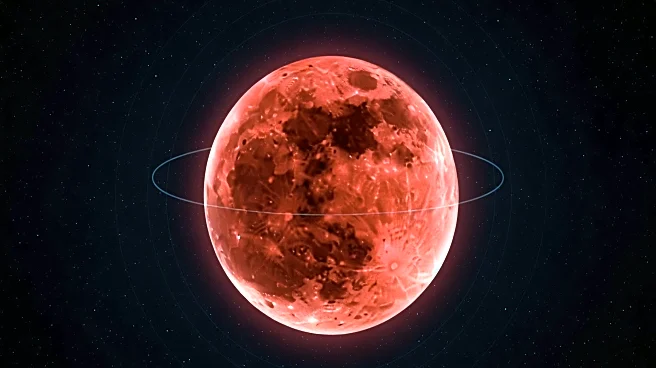
A total lunar eclipse, known as a 'blood moon,' will occur on March 2-3, 2026, and will be visible from parts of North America. The eclipse will last approximately 5.5 hours, with the totality phase, when the moon turns red, lasting 58 minutes. Due to geographical
and weather constraints, not everyone will have a clear view of the event. To accommodate global audiences, several astronomy organizations are planning to livestream the eclipse. These include Timeanddate.com, which will provide live feeds from various locations worldwide, and the Griffith Observatory in Los Angeles, which will offer a comprehensive online broadcast. The Virtual Telescope Project will also curate live footage from astroimagers across the globe. This event marks the last total lunar eclipse visible from North America until June 2029.
Why It's Important?
The March 3 'blood moon' eclipse is significant as it provides a rare opportunity for people worldwide to witness a total lunar eclipse, especially for those in regions where it will not be visible. The event highlights the growing role of digital platforms in making astronomical phenomena accessible to a broader audience. By offering livestreams, organizations are enabling educational outreach and fostering interest in astronomy. This accessibility is crucial for engaging the public in scientific exploration and understanding celestial events. Additionally, the eclipse serves as a reminder of the interconnectedness of global communities through shared experiences facilitated by technology.
What's Next?
Following the March 3 eclipse, astronomy enthusiasts can look forward to the next total lunar eclipse visible from North America in June 2029. In the interim, organizations may continue to leverage digital platforms to broadcast other celestial events, enhancing public engagement and education. The success of these livestreams could encourage further investment in technology and infrastructure to support virtual astronomy experiences. As interest in space exploration grows, these initiatives may inspire future generations to pursue careers in science and technology.